
Did you know that people take roughly 1.8 trillion images every single year? This massive scale means that standing out requires more than just a quick snap on a smartphone.
I have realized that using a mobile photo studio completely changes my creative workflow. It gives me the freedom to find the best light without being stuck in a dark, rented room.
Setting up a professional space shouldn’t feel like a hard chore or require a giant van. With the right gear, I can turn any small kitchen table into a high-end workspace in minutes.
This level of flexibility is a total game-changer for creators who want professional results on the go. You can easily achieve great looks regardless of your location or the time of day.
I love how simple it is to pack everything up and move to the next site. It makes my process much smoother and keeps my energy high while I work.
Key Takeaways
- Achieve professional lighting in any environment effortlessly.
- Reduce the need for expensive and bulky equipment.
- Set up a complete workspace in just a few minutes.
- Improve your creative workflow with lightweight tools.
- Capture high-quality images without a permanent location.
- Maintain total control over your artistic vision anywhere.
What is a Portable Photo Studio?
A portable photo studio has changed how photographers work. It’s a small, flexible setup for taking great photos anywhere. I’ve found it to be incredibly freeing.
Definition and Overview
A portable photo studio is a compact photo studio that’s easy to set up and take down. It usually has lighting, backdrops, and a camera. It’s made to work in different places and conditions.
What you need in a portable studio can vary. Some might need more lights, while others want different backdrops. The goal is to have a setup that can change for each shoot.
Benefits of Using a Portable Studio
One big plus of a portable studio is its flexibility. Photographers can shoot in many places, from outdoors to indoors. This is great for those who need to work in different spots.
- Convenience: Easy to set up and transport.
- Versatility: Can be used in a variety of locations and conditions.
- Cost-effective: Reduces the need for renting different studios or locations.
Using a portable studio also boosts creativity. Without a fixed studio, photographers can try new things. They can play with different backdrops, lights, and shots, leading to more creative photos.
Essential Gear for My Portable Photo Studio
To capture stunning shots on the go, I need the right gear for my portable photo studio. The equipment I choose can make or break the quality of my photos.
Lighting Equipment
Lighting is key in a portable photo studio. A good photography lighting kit can greatly improve my photos. I like using LED lights or softboxes for their soft, diffused light.
I look for lighting that’s portable, has a good power supply, and can be adjusted. A light setup that’s easy to carry is vital for a portable studio.
Backdrops and Surfaces
A versatile photo backdrop stand is essential. It lets me quickly change backdrops, which is key for different shots. I use various backdrops, from solid colors to textured surfaces, to add depth and interest.
| Backdrop Type | Description | Best Use |
|---|---|---|
| Solid Color | Simple, uniform background | Product photography, portraits |
| Textured Surface | Adds depth and interest | Stil life, creative portraits |
| Custom Design | Unique, themed background | Themed shoots, special events |
Camera and Lenses
My camera and lenses are the core of my portable photo studio. I choose a mirrorless camera for its small size and flexibility. I pick lenses based on the photo type, like a macro lens for products or a wide-angle lens for landscapes.
Having the right camera and lenses lets me adjust to different situations. This helps me get the effects I want in my photos.
Setting Up My Portable Photo Studio
Setting up my portable photo studio is key for great shots. Whether in a studio or on-location, being organized is essential.
Choosing the Right Location
Choosing a location for my studio involves a few things. I look for good natural light to improve photo quality. If indoors, the room must be big enough for my photo studio equipment and have a simple background.
Power supply is also important for artificial lighting. A reliable power source keeps the lighting steady during the shoot.
Arranging Your Equipment
Organizing my equipment is vital for a smooth shoot. I start with my portable photo shoot tent or backdrop stand. Then, I set up my lighting. I make sure cables are secure and cameras and lenses are easy to reach.
I also keep reflectors and diffusers ready to adjust my setup as needed.
Tips for Quick Setup
To set up quickly, I follow a few steps. I pack my gear in easy-to-carry bags. This keeps me organized.
At the shoot location, I quickly plan my setup. I find the best spot for my backdrop, position my lighting, and check the power.
- Pack equipment in dedicated, labeled bags for easy access.
- Scout the location before setting up to identify the best spots.
- Have a basic setup plan in mind to save time.
By following these tips, I can set up my studio fast and start taking amazing photos.
How to Create Stunning Backgrounds
To make your photos better, learning about stunning backgrounds is key. A great background can make your subject pop and look better.
Creating stunning backgrounds involves several things. The right background can add depth, texture, and interest. For more tips, check out The Essential Guide to Backdrops.
Using Solid Colors
Using solid colors is a simple way to make a stunning background. Solid colors give a clean look that highlights your subject. Think about the mood you want to show in your photo when picking a color.
Tips for Using Solid Colors:
- Choose a color that complements your subject.
- Use a photo backdrop stand to hold your colored background in place.
- Try different shades to find the best one.
Incorporating Textures
Adding textures to your background can make your photos more interesting. Textures can be fabric, wood, stone, or metal. Pick a texture that goes well with your subject but doesn’t take over.
Some popular textures include:
- Vinyl backdrops for a smooth, professional look.
- Wooden panels for a rustic or natural feel.
- Floral or greenery walls for a lush, vibrant atmosphere.
DIY Background Ideas
Making your own DIY backgrounds can be fun and creative. You can use fabric, paper, or even recycled items to make unique backgrounds.
Some DIY Ideas:
- Paint a large piece of cardboard with bright colors.
- Make a textured background with fabric or lace.
- Use natural settings like parks or beaches as your background.
By trying different techniques and materials, you can make stunning backgrounds. Remember, the background is as important as the subject. So, take your time to get it right.
Lighting Techniques for My Portable Studio
Learning about lighting is key to making my portable photo studio shine. The right lighting can make even simple subjects look amazing.
I have two main lighting options: natural and artificial light. Natural light is soft and flattering, perfect for a natural look. But, it’s not always easy to get or control. That’s why artificial light is great for its consistency and flexibility.
Natural Light vs. Artificial Light
Natural light is often the top choice for photography because it’s soft and diffused. But, it can be hard to get indoors or on cloudy days. Artificial light, on the other hand, lets me control the look, no matter where I am.
Using a mix of natural and artificial light usually works best. For example, natural light as the main source and artificial light to fill in shadows or add depth.
Softbox and Umbrella Lighting
Softbox and umbrella lights are must-haves in my photography lighting kit. Softboxes give a soft, even light that reduces harsh shadows. Umbrellas are more versatile, creating both soft and directional light.
| Lighting Tool | Characteristics | Best Use |
|---|---|---|
| Softbox | Soft, even light; minimizes harsh shadows | Portrait, product photography |
| Umbrella | Versatile; can produce soft or directional light | Variety of subjects; adaptable to different styles |
Using Reflectors
Reflectors are key in my portable studio, used to bounce light and reduce shadows. They come in different colors, each affecting the light’s quality and color.
By mastering these lighting techniques, I can get professional-grade photos from my portable studio. It takes my photography to a whole new level.
Capturing the Perfect Shot
Getting the perfect shot with a portable photo studio needs creativity and skill. When I shoot, I look for ways to better my composition, focusing, and technique.
I focus on composition, focusing, and angles. Let’s explore how these can make your photos better.
Composition Tips
Good composition is key for a great photo. Here are some tips to improve yours:
- Use the rule of thirds to balance your shot.
- Look for leading lines to guide the viewer’s eye.
- Try different framing techniques.
Using these tips will make a big difference in your portable photo studio photos.
Focusing Techniques
Focusing is essential for a sharp image. Here are some techniques I use:
- Use autofocus to quickly focus on your subject.
- Manual focus is good for tricky lighting.
- Play with depth of field for intimacy or grandeur.
Try different focusing techniques to get the effect you want.
Experimenting with Angles
Don’t be shy to try new angles. Shooting from above, below, or at an angle adds drama.
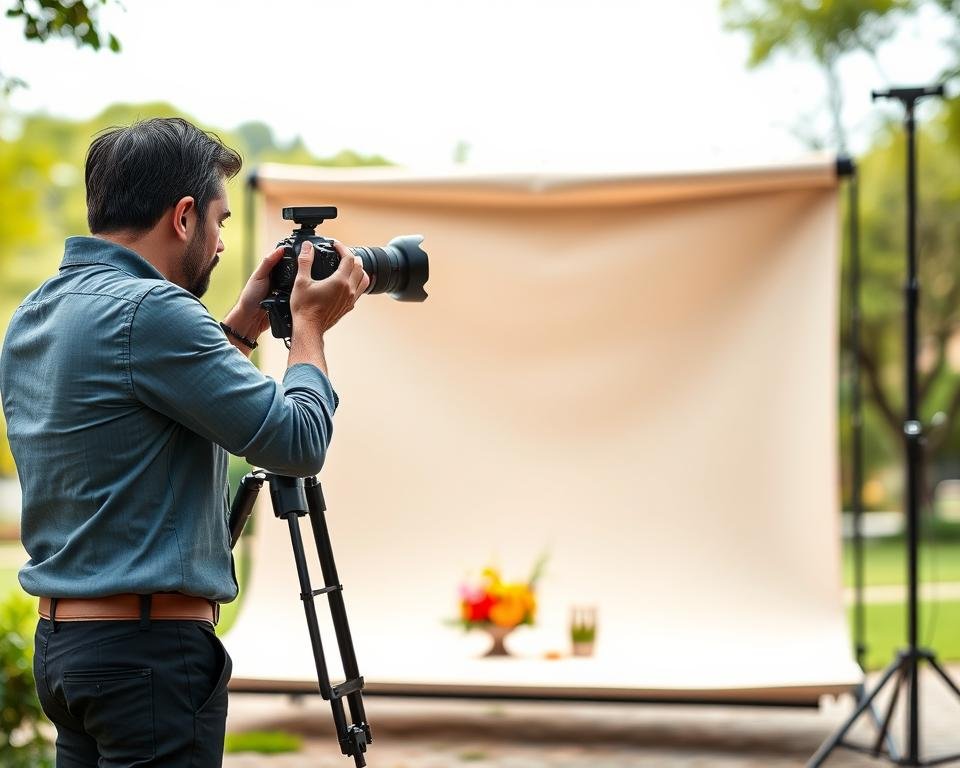
Remember, the secret to amazing photos is to keep trying and have fun with your portable photo studio.
Editing My Photos for a Polished Look
After taking amazing photos with my portable photo studio, editing is the next step. Editing makes my photos look even better. It’s an art that brings out the best in my pictures.
To edit my photos, I need the right tools. The software I use is key to the final look. Here are some recommended editing software options:
Recommended Editing Software
- Adobe Lightroom: Great for managing and editing lots of photos.
- Adobe Photoshop: Has advanced tools for detailed editing.
- Skylum Luminar: Offers filters and effects to enhance photos.
- Capture One: Known for its tethered shooting and color tools.
Each software has its own special features. The choice depends on what I need for my project.
Basic Editing Techniques
Editing starts with the basics. Here are some key techniques I use:
- Adjusting Exposure and Contrast: Balances the light and dark in the photo.
- Cropping and Straightening: Improves the photo’s look and corrects tilt.
- Noise Reduction: Removes grain for clearer images.
These simple steps can make a big difference in my photos.
Enhancing Colors and Contrast
To enhance my photos, I focus on colors and contrast. This includes:
- Color Grading: Changes the color to set a mood or atmosphere.
- Selective Adjustments: Targets specific areas with the adjustment brush.
- Contrast Adjustment: Balances light and dark areas.
By mastering these editing techniques, my photos look amazing. They also convey the message or emotion I want to share.
Sharing My Stunning Photos Online
After taking amazing photos with my mobile photo studio, I want to share them online. Today, having an online presence is key for photographers. It helps them show their work and find new clients.
There are many places to share photos. I’ll talk about the best ones for photographers. I’ll also share tips on making a great portfolio and using hashtags to reach more people.
Best Platforms for Photographers
As a photographer, I look for platforms that are easy to use and look good. Some top choices are:
- Instagram: Perfect for showing off photos and talking with others through comments and hashtags.
- 500px: A place for photography lovers to share and get feedback on their work.
- Behance: Great for building a detailed portfolio that shows off my photography skills.
Each platform has its own special features and audience. This lets me tailor my content and how I interact with others.
Creating an Engaging Portfolio
Having a standout portfolio is key to attracting clients. To make mine great, I focus on:
- Choosing my best photos to show off my skills.
- Organizing my portfolio in a clear and easy-to-follow way.
- Keeping my portfolio fresh with new photos to keep viewers interested.
This way, I can show off my talent and style to everyone who sees my work.
Utilizing Hashtags Effectively
Hashtags are important for getting my photos seen online. To use them well, I:
- Find popular and relevant hashtags in my field.
- Use a mix of broad and specific hashtags to reach different audiences.
- Don’t overdo it with hashtags to keep my posts looking clean and not spammy.
By following these tips, I can improve my online presence. This helps more people see my photography.
Common Mistakes to Avoid
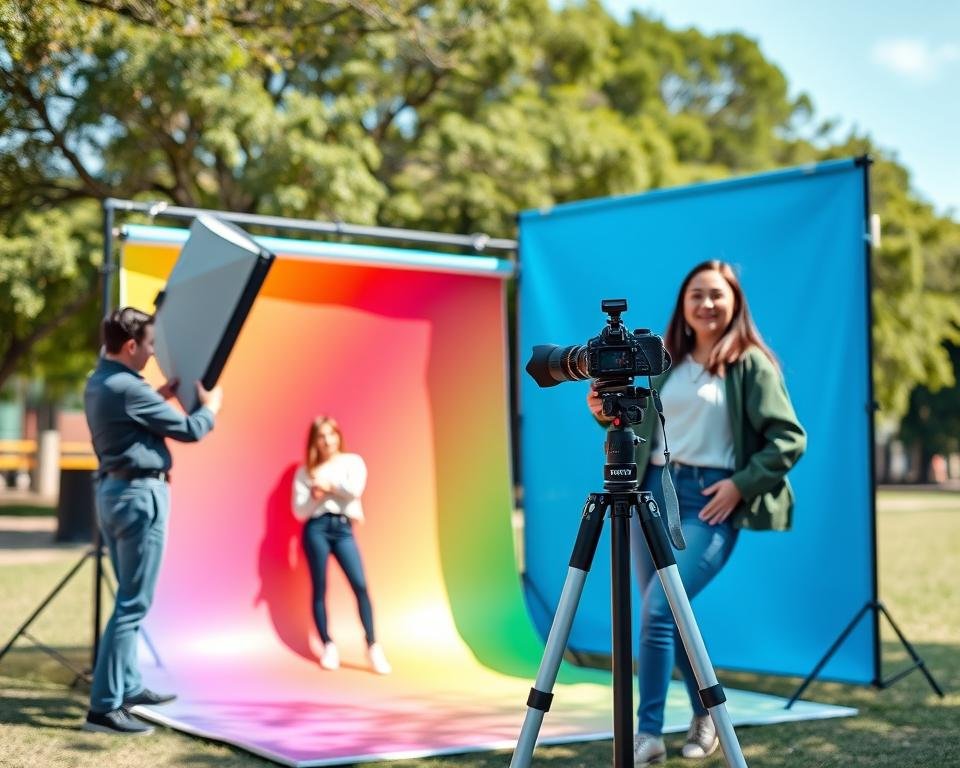
Creating a stunning photo with a portable studio is more than just good equipment. It also requires knowing common mistakes. When I set up my compact photo studio, I avoid several pitfalls with the right knowledge.
Underestimating Lighting
Lighting is a key part of photography. Underestimating the importance of proper lighting can ruin photos. I use both natural and artificial light to improve my shots.
During the day, I place my studio near a window to use natural light. If that’s not possible, I use high-quality lighting equipment like softboxes or umbrellas.
Ignoring Background Details
Another mistake is ignoring the background details of your photos. A messy or distracting background can overshadow the subject. I make sure the area behind my subject is clean and simple.
Using a portable backdrop helps achieve a clean background. I choose solid colors or simple textures that enhance the subject without distracting from it.
Overcomplicating the Setup
Overcomplicating the setup of your portable photo studio can be frustrating. I’ve learned that simplicity is essential.
I keep my essential photo studio equipment organized and easy to find. This lets me quickly set up and start shooting without delays.
Conclusion: My Journey with the Portable Photo Studio
My time with the portable photo studio has been truly rewarding. It lets me take amazing photos anywhere, anytime. This flexibility has really boosted my photography skills.
Starting Your Own Journey
If you’re thinking about getting a portable photo studio, go for it. With the right tools and some practice, you can make beautiful, professional photos. Start by setting up your studio in different places and try out different lighting setups.
Final Tips for Success
To make the most of your portable photo studio, keep things simple and be ready to adjust to new places. Remember, practice is key. It might take a few tries to get the shot you want. But with patience and effort, you’ll soon be taking amazing photos with your portable studio.