

Did you know workers with great workspaces are 16% more productive? This means a top-notch room can give me almost an extra day of work every week. My surroundings greatly impact how I think and feel all day.
Creating a custom home office setup is more than a weekend project. It’s about making a space that inspires me to excel. Small changes, like an IKEA lamp or a comfy chair, boost my daily energy a lot.
A well-thought-out space sharpens my focus and keeps me organized during busy times. In this guide, I’ll show you how to choose the best spot and furniture for your DIY desk studio. We can turn any dull corner into a creative and cozy haven.
Key Takeaways
- A personal workspace can increase your overall productivity by 16%.
- Your physical environment directly impacts your mood and focus.
- I find that picking a quiet location is essential for success.
- Effective furniture choices help prevent fatigue during long shifts.
- Customizing your space allows you to express your unique style.
Understanding My Workspace Needs
Knowing what I need in my workspace is the first step to making a productive DIY desk studio. To make a space that boosts creativity and efficiency, I need to think about a few important things.
Assessing My Productivity
Figuring out how I work best is key. Do I do better in quiet or with some background noise? Knowing how I work helps me pick the right features for my space.
If I get distracted easily, I might need tools like noise-cancelling headphones or a website blocker. But if I work well with others, I might want to set up near a common area.
“The way we work is changing. The old command-and-control model is giving way to a more flexible, more adaptive approach.”
Defining My Style Preferences
It’s important to think about my personal style when setting up my workspace. This means looking at what inspires me and makes me feel at ease.
| Style Element | Description | Impact on Workspace |
|---|---|---|
| Color Scheme | Choosing colors that spark creativity and calmness. | Affects my mood and how productive I am. |
| Furniture | Picking pieces that are both useful and look good. | Improves comfort and work efficiency. |
| Decor | Adding personal touches that show who I am. | Makes the space feel welcoming and personal. |
Considering Space Limitations
It’s important to think about the size of my workspace. Whether it’s small or big, making the most of the space is essential for a good workspace.
This might mean using wall shelves, small furniture, or smart storage to use every inch. This way, my workspace will be both useful and cozy.
By carefully looking at my productivity needs, my style, and the space I have, I can make a DIY desk studio that fits me perfectly. This careful planning will help me make a workspace that boosts my productivity and sparks my creativity.
Choosing the Right Location
Starting your DIY desk studio begins with picking the perfect spot. When I set out to build your own desk, I learned the location matters a lot. It affects how well you work and how comfortable you feel.
The spot where you work can change your whole experience. Think about a few key things to make sure your desk is both useful and comfy.
Evaluating Natural Light
Light is very important. A desk near a window gets you lots of natural light. This can make you feel happier and more awake. But, you might need to deal with glare on your screen.
Checking Power Outlets
Power outlets are also key. Make sure there are enough nearby to charge all your gadgets. This includes your computer, monitor, and more.
Considering Noise Levels
Noise can really mess with your focus. Pick a quiet spot for your desk. If your area is loud or you live with people, you might need to soundproof or use headphones.
By thinking about these things, you can make a workspace that helps you work better. It keeps you focused on your tasks.
Selecting Essential Furniture
To make your workspace efficient and comfy, picking the right furniture is key. The furniture in your DIY desk studio greatly affects your productivity and work experience.
The Perfect Desk: Size and Shape
When picking a desk, think about the size and shape that fits your space and work style. A desk that’s too small might not give you enough room. On the other hand, a desk that’s too big can make the room feel cramped. Measure your space carefully and choose a desk that’s just right for your area.
For example, a corner desk is great for saving space. Also, think about the desk’s shape. A rectangular desk offers lots of room, while an L-shaped desk adds storage and more space.
Comfortable Chair Options
A comfy chair is vital for staying productive during long hours. Look for a chair with adequate lumbar support and adjustable height. This ensures it fits your body perfectly. Choose a chair with breathable fabric or mesh to stay cool during long work sessions.
When trying out chairs, check the armrests. They should be adjustable and let you rest your arms at a 90-degree angle. This prevents strain on your shoulders and neck.
Additional Storage Solutions
Good storage is essential for a tidy and organized workspace. Think about adding storage like filing cabinets, shelves, or desk organizers to your DIY desk studio.
| Storage Solution | Description | Benefits |
|---|---|---|
| Filing Cabinets | Vertical or lateral cabinets for storing documents | Keeps important documents organized and within reach |
| Shelves | Floating or mounted shelves for books, decorations, or office supplies | Adds storage and visual interest to the workspace |
| Desk Organizers | Trays or containers for organizing office supplies on your desk | Helps maintain a clutter-free workspace and improves productivity |
By choosing the right furniture, you can make a DIY desk studio that’s both useful and comfy. This will improve your work experience.
DIY Desk Ideas that Inspire
With a bit of creativity, you can make any space a vibrant DIY desk studio. It boosts creativity and efficiency. A good workspace also shows off your personal style.
Let’s look at some inspiring ideas for a unique studio desk design. DIY projects are great because you can reuse and upcycle materials.
Upcycling Old Furniture
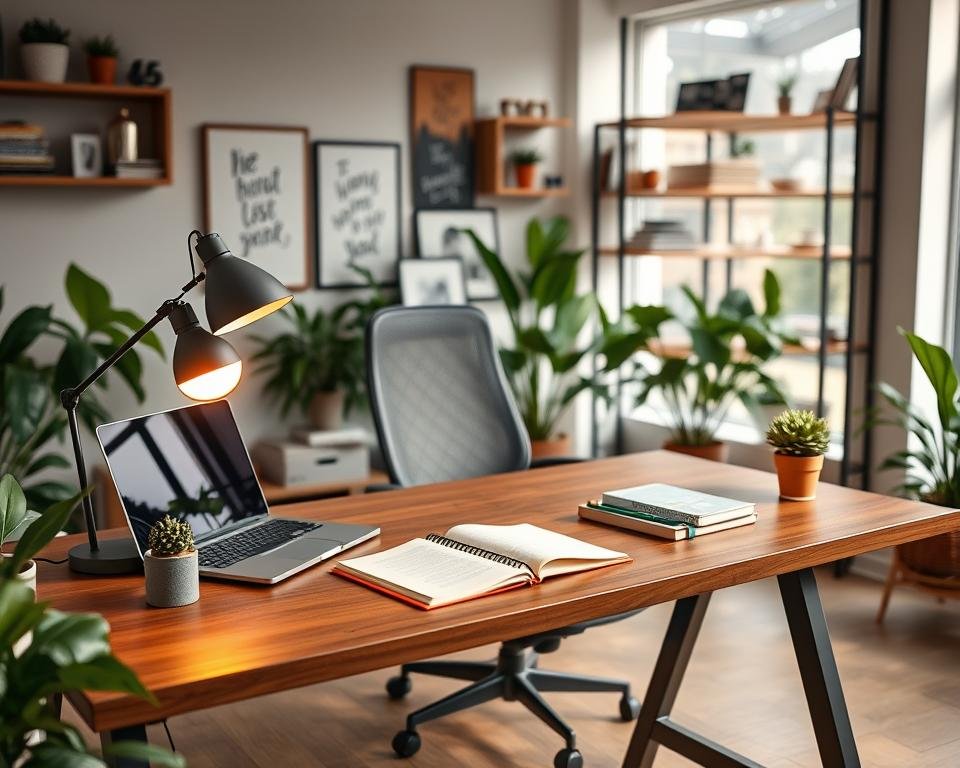
Upcycling old furniture adds character to your DIY desk studio. You can turn an old door into a desk or use vintage drawers for storage. It’s eco-friendly and adds history to your workspace.
Creative Use of Pallets
Pallets are very versatile and can be used for many furniture pieces. You can make desks or shelving units from them. Their rustic look brings a cozy, industrial vibe to your space.
To make a pallet desk, stack the pallets, secure them, and add a glass top. You can also add casters for mobility.
Incorporating Floating Shelves
Floating shelves are perfect for adding storage without taking up much space. They’re great for books, decorations, or office supplies. This keeps your workspace tidy and organized.
When picking floating shelves, think about the material and color that fits your studio’s look. You can also make your own using reclaimed wood for a unique touch.
By using these DIY desk ideas, you can make a space that’s both functional and inspiring. Whether you’re working on creative projects or just tasks, a well-designed workspace makes a big difference.
Choosing Colors and Aesthetics
Building a DIY desk studio that sparks my creativity means picking the right colors and design. The colors and design I choose can really boost my mood and productivity. It’s all about creating a space that feels good to work in.
Color Psychology in My Workspace
Colors deeply affect our feelings and how well we work. Different colors can make us feel different ways. So, picking a color scheme that fits my work style is key.
For example, blue helps me stay calm and focused. Yellow, on the other hand, boosts my creativity. I choose colors based on the kind of work I’ll be doing.
Matching My Personality
My workspace should show who I am. If I love simplicity, I go for a clean look. If I’m more into mixing things up, I add lots of colors and patterns.
I think about my favorite colors and hobbies when designing my space. For instance, if I love to read, I might add a cozy reading corner.
Choosing Accessories to Compliment
Accessories are key to my desk studio’s look. I pick items that are both useful and stylish. This includes finding affordable furniture that fits my taste.
Some important accessories include:
- Decorative items like vases, sculptures, or artwork
- Functional items like desk lamps, pen holders, or file organizers
- Textiles like rugs, throw pillows, or wall hangings
| Accessory Type | Functionality | Aesthetic Appeal |
|---|---|---|
| Desk Lamp | Provides task lighting | Adds a touch of modernity |
| Artwork | Personalizes the space | Creates visual interest |
| Rug | Defines the workspace | Adds warmth and texture |
By carefully choosing colors, matching my space to my personality, and picking the right accessories, I create a desk studio that’s both useful and inspiring.
Technology Considerations
Now that I have my DIY desk plans, it’s time to think about the technology. I need gadgets, tools, and equipment to make my workspace efficient.
Essential Gadgets for My Studio
Choosing the right gadgets is key to staying productive. For my DIY desk studio, I need a reliable computer or laptop, a top-notch monitor, and a comfy keyboard and mouse. Getting a good quality headset is also vital for video calls and online meetings.
I also look at other gadgets to improve my workspace. A printer, scanner, and paper shredder help me stay organized and manage my documents well.
Cable Management Solutions
A clean workspace is not just pretty; it’s also more functional. To keep my space tidy, I focus on cable management solutions. Cable ties, organizers, and concealers help manage my equipment.
Investing in a desk with built-in cable management features is also a good idea. Features like grommets or cable trays keep my space organized.
Setting Up Work-From-Home Equipment
Setting up my DIY desk studio for work-from-home requires the right equipment. I need a stable internet connection, a comfy and ergonomic chair, and a noise-canceling headset.
I also think about ergonomic equipment like a standing desk or a sit-stand workstation. These help promote healthy working habits and prevent injuries.
Personalization and Decor
To make my home office feel welcoming, I focus on personal touches and decor. A DIY desk studio that’s personalized boosts my productivity and makes work more enjoyable.
Adding Personal Touches
I start by adding personal touches that make my space feel like mine. This includes family photos, personal mementos, or collectibles that inspire me.
- Displaying personal items on my desk or shelves
- Incorporating personal colors or themes into my decor
- Adding unique decorative pieces that reflect my personality
Art and Visual Inspiration
Art and visual elements are key to making my DIY desk studio inspiring. I enjoy adding motivational quotes, artwork, or vision boards that spark my creativity.
- Creating a gallery wall with framed prints or paintings
- Using colorful rugs or mats to add visual interest
- Incorporating sculptures or other three-dimensional art pieces
Greenery: Plants for the Workspace
Adding greenery to my home office is another way to enhance the ambiance. Plants not only purify the air but also add natural beauty to my DIY desk studio.
Some low-maintenance plant options for the workspace include:
- Snake plants
- ZZ plants
- Succulents
By incorporating these elements, I create a workspace that’s both functional and beautiful.
Lighting Options for My Studio
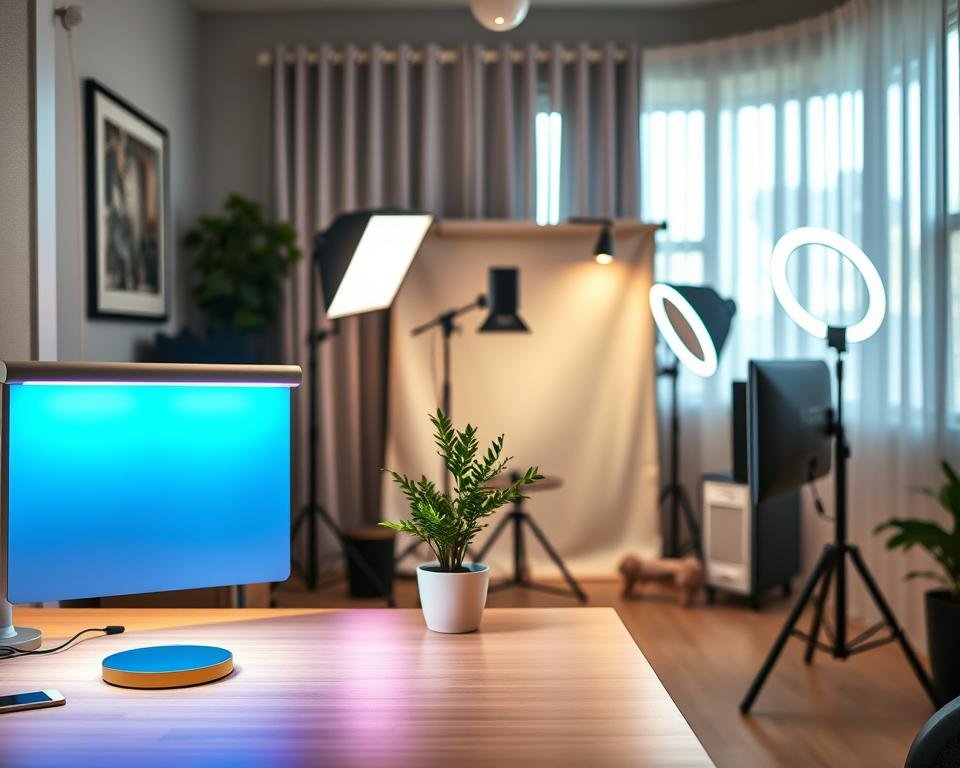
Setting up my DIY desk studio made me realize how important lighting is. It can change the mood and how well I work. Good lighting can make me feel better, reduce eye strain, and help me work better.
I looked at three key areas for lighting: task, ambient, and natural light. Each one is important for a bright and comfy workspace.
Desk Lamps for Task Lighting
Task lighting is key for areas where I focus, like my desk. I picked a desk lamp with adjustable brightness and direction. This lets me change the light to fit my needs.
I looked for a desk lamp that’s energy-efficient, durable, and stylish. An LED lamp with a flexible arm and small design works great for my studio.
Ambient Lighting Ideas
Ambient lighting sets the mood of my studio. I used overhead lights and floor lamps for this. Warm-toned bulbs make the space cozy and inviting.
I also tried string and fairy lights for a unique feel. They add warmth and personality, making my studio feel welcoming and inspiring.
Natural Light Enhancements
Natural light is good for my health and looks great in my studio. I put my desk near a window and used mirrors to reflect light.
For more tips on DIY studio lighting, I checked out a guide on creating DIY studio with household items. It shows how to use everyday items to improve natural light in my studio.
Here’s a comparison of different lighting options for my studio:
| Lighting Type | Benefits | Examples |
|---|---|---|
| Task Lighting | Illuminates specific areas, reduces eye strain | Desk lamps, under-cabinet lighting |
| Ambient Lighting | Sets the overall mood and atmosphere | Overhead lighting, floor lamps, string lights |
| Natural Light Enhancements | Boosts mood, enhances aesthetic | Mirrors, skylights, larger windows |
Maintaining an Organized Studio
To keep my DIY desk studio running smoothly, I focus on staying organized. An organized space boosts productivity, sparks creativity, and lowers stress.
Effective Decluttering Techniques
Decluttering is key to a tidy studio. I sort items into three piles: keep, donate, and discard. This method helps me decide what’s truly needed.
Some effective decluttering tips include:
- Sorting items into categories
- Removing unnecessary paperwork and documents
- Donating or recycling unused materials
Productivity expert David Allen once said, “You can do anything, but not everything.” This advice guides me in keeping my space clutter-free.
“You can do anything, but not everything.”
Storage Solutions for a Tidy Studio
Finding the right storage is vital for a clean studio. I use desk organizers, shelves, and cabinets to keep things tidy.
| Storage Solution | Description | Benefits |
|---|---|---|
| Desk Organizers | Containers for pens, papers, and office supplies | Keeps frequently used items within reach |
| Shelves | Vertical storage for books, decorative items, and less frequently used supplies | Maximizes vertical space and keeps the workspace clear |
| Cabinets | Enclosed storage for sensitive documents and equipment | Provides secure storage and reduces clutter |
Regular Maintenance Routines
To keep my studio in order, I stick to a maintenance routine. This includes daily tidying, weekly decluttering, and monthly deep cleaning.
By making these habits part of my daily life, my DIY desk studio stays a productive and inspiring place.
Final Touches and Enhancements
As I finish my DIY desk studio, I see how the right vibe can boost my work. Adding sensory touches makes my space both useful and fun.
Scenting My Workspace
Using aromatherapy in my area is a smart move to sharpen my focus. Peppermint or lavender essential oils can refresh and calm me. I can spread these scents around with a diffuser or candles.
Creating a Soothing Atmosphere
Music and sounds can also make my space better for work. Playing soft tunes or nature sounds helps me relax. When setting up, picking affordable furniture and DIY plans keeps costs down. It also helps me create a space that sparks creativity.