

Did you know that making your home look great can increase its value by up to 5%? This small effort can add thousands of dollars to your sale price. I think every house has a story to tell through thoughtful design.
It’s about creating a story that makes visitors feel at home as soon as they enter. I want everyone to imagine living in that space. My top home staging tips aim to connect people emotionally with the space.
With smart interior styling, I reveal the hidden beauty in every corner. These changes are great for selling or just updating your home. I love how they turn any room into a cozy, welcoming space.
Key Takeaways
- Understand the emotional impact of a well-arranged room.
- Increase your property value with strategic design choices.
- Create a welcoming vibe that appeals to modern buyers.
- Highlight the best features of your living space effortlessly.
- Use simple decor to tell a compelling and cozy story.
- Transform ordinary rooms into memorable living experiences.
What is Lifestyle Staging and Why It Matters?
Lifestyle staging shows a home in a modern and stylish way. It’s an art that makes a space look good and work well. It also attracts buyers.
This approach creates a vibe that speaks to the audience. It lets them see themselves living in the home. It’s more than decorating; it’s telling a story that meets their dreams.
The Purpose of Lifestyle Staging
The main goal is to connect buyers emotionally with the home. This can lead to a quicker sale at a better price. A study found staged homes sell 73% faster and for up to 17% more.
“Staging is not just about making a home look good; it’s about making it feel like a home.”
Key Elements of Lifestyle Staging
Effective staging includes several important parts. These are:
- Contemporary Style: Using modern furniture and decor.
- Functionality: Making sure each room works well.
- Lighting: Creating a cozy and inviting feel with light.
- Personal Touches: Adding elements that show the home is loved.
Here’s a table showing the difference between staged and unstaged homes:
| Feature | Staged Homes | Unstaged Homes |
|---|---|---|
| Selling Price | Up to 17% more | Standard market price |
| Time on Market | 73% faster | Longer duration |
| Buyer Appeal | High | Low to Moderate |
By focusing on these elements, homeowners can make their property more appealing. This attracts more buyers.
How Lifestyle Staging Transforms Spaces
Turning a space into a captivating home is more than just adding furniture. It’s about using lifestyle staging to create emotions through design. This approach makes a home beautiful, functional, and emotionally connected.
Focusing on Functionality
A key part of lifestyle staging is focusing on functionality. It’s about arranging furniture and decor to show how each room works. For example, a well-staged living room should show how it’s perfect for relaxing and entertaining.
Evoking Emotion with Design
Lifestyle staging also aims to evoke emotions with design. By choosing the right colors, textures, and decor, a warm and inviting atmosphere can be created. This atmosphere connects with people, making a space memorable.
Adding personal touches and decor inspiration makes a house feel like a home. This emotional connection is key to making a property stand out.
Highlighting Architectural Features
Another key aspect is highlighting architectural features. Features like stunning staircases, large windows, or cozy fireplaces should be showcased. This adds character and identity to the space.
By focusing on these features, lifestyle staging turns a house into a welcoming home. It makes the space feel lived-in and special.
My Journey with Lifestyle Staging
Starting my journey with lifestyle staging, I quickly saw its big impact on first impressions. I’ve worked with many homeowners and buyers. A well-staged home can really grab attention and interest.
First Impressions Matter
The first impression often lasts, and in home selling, it’s key. Lifestyle staging is more than just furniture arrangement. It’s about creating a vibe that speaks to buyers. I’ve learned that the right staging can show off a home’s best points and hide its not-so-great ones.
I remember a home where the owners had done a lot of interior styling but it didn’t quite feel right. We changed the furniture and added some decor. This turned the space into a cozy home that buyers could see themselves in.
Personal Experiences with Staging
I’ve worked on many staging projects, each with its own challenges and wins. One standout was a vacant home that had been on the market for months. With good staging services, we drew in more viewers and sold it for more than expected.
| Staging Element | Impact on Buyers | Outcome |
|---|---|---|
| Furniture Arrangement | Creates a sense of flow and space | Increased buyer interest |
| Color Scheme | Influences mood and perception | Enhanced emotional connection |
| Decor and Accessories | Adds character and warmth | Improved overall appeal |
These experiences have made me believe in lifestyle staging’s power. It’s not just about looks; it’s about telling a story that connects with buyers. It helps them see themselves in the home.
Tips for Effective Lifestyle Staging
Reflecting on my journey with lifestyle staging, I’ve learned it’s about connecting with buyers. Making a lasting impression is key.
Choosing the Right Colors
Colors set the mood of a space. Neutral shades like beige, gray, and white are favorites because they please many. Soft pastels add warmth and coziness.
- Neutral colors: beige, gray, white
- Soft pastels for warmth
- Avoid bold colors
Furniture Placement Strategies
Furniture placement is vital for a room’s flow. For more tips, check out 10 expert tips for staging your home. Here are some strategies:
- Balance furniture for harmony
- Ensure space for movement
- Highlight architectural features
Adding Personal Touches
Personal touches make a house feel like home. Here are some tips:
- Add family photos or artwork that shows the homeowner’s personality
- Incorporate plants or flowers for a natural touch
- Use scented candles or essential oils for a welcoming smell
The Role of Accessories in Lifestyle Staging
Accessories are key in lifestyle staging, adding depth and character to any space. They play a big role in interior decor, showing off modern living and current trends.
The right accessories can turn a room from ordinary to extraordinary. They bring sophistication and personality, making a space feel lived-in. When staging a home, finding the right balance between function and beauty is key.
Importance of Textures and Layers
Using different textures and layers is vital in lifestyle staging. Mixing materials like velvet, linen, and wood makes a space interesting. For example, a velvet sofa, a linen armchair, and a wooden coffee table can add depth to a living room.
Textures and layers do more than look good; they make a space feel welcoming. By mixing textures, you can create a cozy atmosphere that attracts buyers.
Selecting the Right Decor Items
Picking the right decor items is essential in lifestyle staging. It’s not just about filling a space; it’s about choosing items that enhance the look. Consider the home’s style and the audience you’re targeting.
For instance, a modern living room needs sleek, minimalist decor. A traditional space might call for ornate pieces. The goal is to create a look that’s both stylish and timeless.
| Decor Item | Modern Style | Traditional Style |
|---|---|---|
| Vases | Sleek, geometric shapes | Ornate, classic designs |
| Lighting | Minimalist fixtures | Elegant chandeliers |
| Artwork | Abstract, contemporary pieces | Classic, framed prints |
Seasonal Decor Ideas
Adding seasonal decor can refresh your staging. For spring, use vibrant flowers and greenery. In winter, warm lighting and cozy textiles create a cozy feel.
Seasonal decor is more than holidays; it’s about capturing the season’s essence. By using seasonal elements, you can make a home feel lively and engaging.
Common Mistakes in Lifestyle Staging
Reflecting on my lifestyle staging experiences, I see that avoiding common mistakes is key. It’s not just about making a home look good. It’s about creating a welcoming space that buyers will love. But, some mistakes can pull buyers away.
To stage a home well, knowing the pitfalls is important. Let’s look at some common mistakes to steer clear of.
Overcrowding a Space
Overcrowding is a big mistake in lifestyle staging. Too much furniture and decor can make a space feel small and unwelcoming. It’s important to find a balance between furnishing and leaving room for movement. Choosing a few key pieces can make a room feel bigger and more inviting.
Neglecting Lighting
Lighting sets the mood of a space. Not paying attention to lighting can make a home feel dark and uninviting. Natural light is key, so make sure windows are clear and curtains are open. At night or in dark rooms, mix overhead, table, and floor lamps for a cozy feel.
Ignoring Target Audience
Knowing and meeting the target audience is critical in lifestyle staging. Not considering what buyers want can make staging fail. For example, if buyers are young families, adding cozy spots or play areas can make the home more appealing.
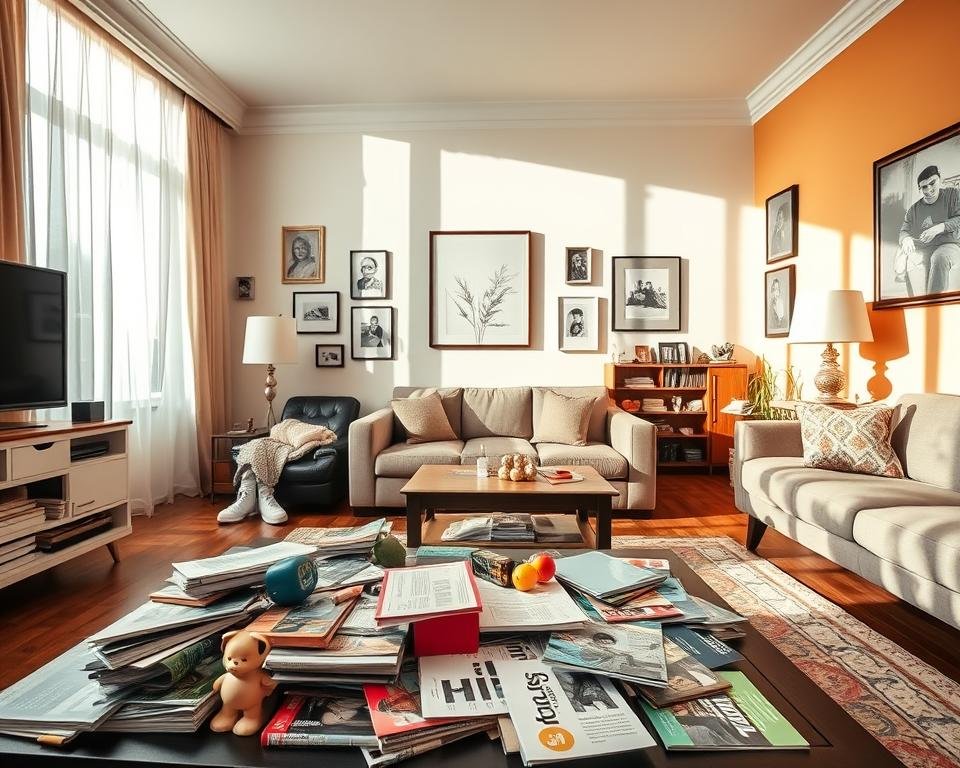
By avoiding these common mistakes, homeowners can make their lifestyle staging successful and attractive to buyers.
Budgeting for Lifestyle Staging
Lifestyle staging doesn’t have to break the bank. I’m here to share some budget-friendly tips. The goal is to make your home welcoming and appealing to buyers or to improve your living space.
Staging isn’t just about spending money. It’s about making smart choices that boost your home’s contemporary style. By choosing decor inspiration that fits your target audience, you can create a space that’s both inviting and stylish.
Cost-Effective Solutions
To stage your home without spending too much, try these cost-effective ideas:
- Repurpose existing furniture and decor items.
- Shop for second-hand or discounted items.
- Use lighting to enhance the ambiance.
Repurposing is a smart way to save money. For example, using old jars as vases or turning an old ladder into a bookshelf can add a unique touch. This not only saves money but also adds a personal touch to your home staging.
Understanding Value vs. Cost
It’s important to know the difference between the cost and value of staging services. Some staging services might seem pricey, but they can really make your home more appealing.
When looking at the cost of staging services, think about the return on investment. A well-staged home can attract more buyers and possibly increase the selling price. So, understanding the value of staging is key to making smart budgeting choices.
Professional Help vs. DIY Staging
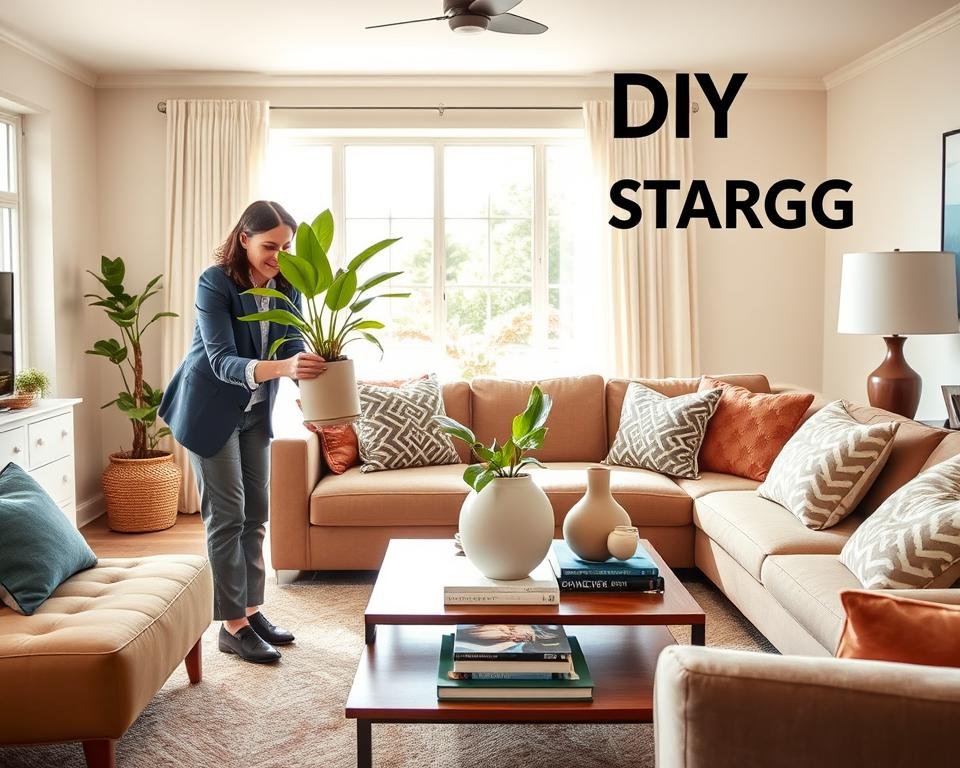
Homeowners often face a tough choice between hiring a pro and doing it themselves. Lifestyle staging is more than just moving furniture. It’s about turning a house into a home that buyers will love. Choosing between a professional and DIY can greatly affect the outcome.
It’s important to consider the pros and cons of each option. Professionals have the skills and an unbiased view. DIY lets homeowners add their personal touch within their budget.
When to Hire a Professional
There are times when hiring a pro is best. If your home is complex or oddly shaped, a pro can make it shine. If you’re busy or new to design, a pro can save you time and effort.
Key scenarios for hiring a professional include:
- Complex or unique spatial layouts
- Lack of personal experience in interior design
- Tight deadlines for staging
A pro can also share the latest home design and interior decor trends. These can attract more buyers.
Benefits of DIY Staging
DIY staging has its perks. It lets homeowners control the look, reflecting their style. It’s also cheaper, as you don’t need to pay for outside help.
| Aspect | Professional Staging | DIY Staging |
|---|---|---|
| Cost | Generally more expensive | Can be cost-effective |
| Expertise | Brings professional experience | Dependent on homeowner’s knowledge |
| Time | Saves time for homeowners | Requires significant time investment |
In conclusion, the choice between professional help and DIY staging depends on several factors. These include budget, time, and personal preference. Understanding the pros and cons of each can help homeowners make the best choice for their needs.
The Lasting Impact of Lifestyle Staging
Lifestyle staging changes how we see and value homes. It makes them look better and more appealing. This is thanks to modern touches and keeping up with trends.
Long-Term Value
Lifestyle staging is more than a quick fix. It’s about making a home stand out for good. Homeowners can increase their home’s value and attract more buyers.
Enduring Appeal
A staged home feels welcoming. It helps buyers imagine living there. This emotional connection can speed up the sale process.
A Lasting Legacy
Embracing lifestyle staging leaves a lasting mark. It turns a home into a reflection of personal style. And it stays current in the fast-paced world of modern living.