



Did you know that posts with organized top-down views get almost 40% more likes on social media? This shows how much people love clean, neat pictures. My first try at flat lay was a mess of coffee beans and tangled headphones on my kitchen floor.
Now, flat lay photography is key for anyone wanting a stunning online presence. I’ve spent years improving my skills, turning messy piles into professional layouts. Creating a visual story is about more than just placing items on a table.
In this guide, I’ll share my secrets for perfecting your own style. You’ll find lots of flat lay photo ideas to help with light, balance, and color. My aim is to make you feel confident with your camera or phone.
We’ll cover everything from choosing the right backdrop to editing. Stunning visuals are just a few tweaks away. Let’s explore the world of creative overhead storytelling together.
Key Takeaways
- Use natural light from a window to minimize harsh, distracting shadows.
- Select a neutral background to make your main subjects stand out clearly.
- Pick a consistent color palette to create a cohesive and professional look.
- Experiment with odd numbers of items to create more visual interest.
- Leave enough empty space so the composition does not feel crowded.
- Use a tripod or a steady surface to ensure your shot is perfectly level.
- Add textures like linen or wood to provide depth to your image.
What is Flat Lay Photography?
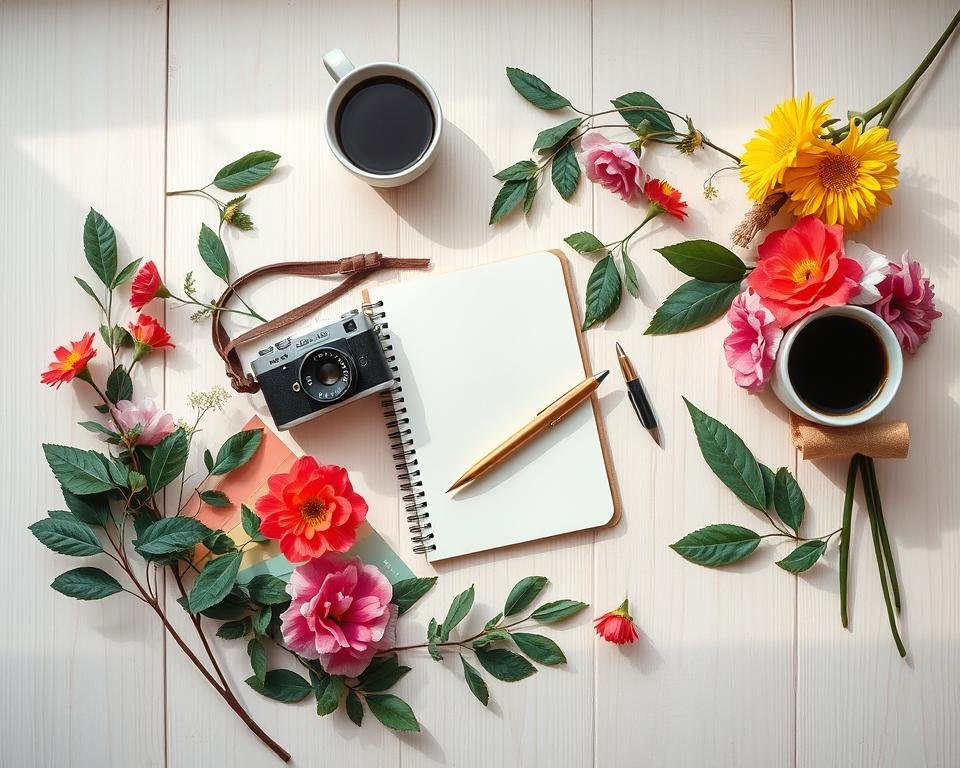
Flat lay photography is about arranging objects in a way that tells a story or shows off a product. It’s become very popular on social media and in marketing. This style makes things look good and tells a story.
To get what flat lay photography is about, we need to look at its definition and where it started. It’s a photo taken from above of objects laid out flat. The term comes from the fashion world, where it was used to show off clothes and accessories.
Definition and Origin
Flat lay photography started in fashion and advertising. It was first used to show off clothes and accessories. Now, it’s used for food, travel, and lifestyle photos too. Social media, like Instagram, has made it even more popular.
“Flat lay” means taking a photo of objects on a flat surface, from directly above. This method lets photographers make beautiful pictures that show off the objects’ looks and feel. It’s simple and flexible, which is why so many people like it.
Key Characteristics of Flat Lays
A good flat lay has a few important things: composition, styling, and detail. The flat lay composition is about arranging objects in a way that looks good. This means balancing colors, textures, and shapes.
Flat lay styling is about picking objects that go well together. It’s about knowing how different things look together and how to arrange them to tell a story.
Pay attention to detail in flat lay photography too. Make sure objects are clean, well-lit, and arranged right. The background and props also play a big part in how the flat lay looks.
Knowing the basics of flat lay photography helps photographers and marketers make great pictures. Whether it’s for showing off products, telling stories, or just making pretty pictures, flat lay photography is a great tool.
Why Choose Flat Lay Photography?
Flat lay photography boosts your creativity and offers a new view. It’s more than just placing objects on a flat surface. It’s a way to share stories, feelings, and show off products in a special way.
It’s loved by many, from fashion bloggers to food lovers. Its versatility in styling is key. You can play with themes, colors, and textures to make eye-catching pictures.
Versatility in Styling
Flat lay photography is very flexible. It works for brands, social media, or just for fun. You can pick a theme or color scheme and use props to make your shots interesting.
- Try different backgrounds and textures for depth.
- Use colors and contrast for beautiful images.
- Add props to tell a story or add context.
For more ideas, check out Digital Photography School. They have great tips to improve your photography.
Enhancing Your Creativity
Flat lay photography is about telling a story with your shots. It makes you think creatively and try new things. As you get better, your photography skills will grow too.
“The creative adult is the child who has survived.” This quote fits flat lay photography perfectly. It shows that creativity has no limits.

By doing flat lay photography, you improve your skills and express yourself. It’s a powerful way to stand out in photography.
Essential Gear for Flat Lay Photography
Flat lay photography needs careful equipment selection for top-notch results. It’s not just about the camera; it’s about setting up for creativity and precision.
The camera is the base of any photography setup. For flat lay, you don’t need the latest camera. But, a good quality camera makes a big difference.
Camera and Lens Recommendations
DSLR and mirrorless cameras are best for their image quality and manual controls. A prime lens with a focal length of 50mm to 60mm is recommended. It offers a natural view with little distortion.
Key Considerations for Cameras and Lenses:
- Image resolution and quality
- Manual focus and exposure controls
- Lens distortion and perspective
Tripods and Lighting Equipment
A strong tripod is key for flat lay photography. It keeps the camera steady for sharp images, even in dim light. Natural light is best, but a good lighting kit is needed when it’s not available.
Tips for Tripods and Lighting:
- Choose a sturdy, adjustable tripod
- Use a remote shutter release or timer
- Try different lighting setups for the mood you want
Investing in the right gear and knowing how to use it boosts your flat lay photography quality. Remember, great flat lay photography is about creativity and detail, not just the equipment.
Preparing Your Flat Lay Setup
Getting your flat lay setup ready is key to making your images pop. It’s all about planning and paying attention to the little things. This way, you can make a composition that looks great.
In flat lay photography, the setup is everything. It’s not just about putting things together. It’s about telling a story or sending a message through your arrangement. To do this, you must think about a few important things.
Selecting a Background
The background of your flat lay is very important. It sets the mood for the whole image. You can pick from paper, fabric, or wood, depending on what you’re going for. For example, a simple background can make your items pop, while a textured one can add depth.
Tips for choosing a background:
- Match the background color to your items.
- Think about the texture and how it will look with your items.
- Keep it simple to focus on your main subjects.
Choosing Props and Elements
Props and elements make your flat lay interesting. They should be picked with care to fit your image’s story or theme. Balance is key; you don’t want it to look too full or too empty.
Tips for choosing props:
- Pick items that fit your theme or story.
- Use different textures and colors to add interest.
- Don’t overdo it; too many props can clutter the image.
By choosing your background and props wisely, you can make a flat lay that looks good and tells your story well.
Composing Your Flat Lay Shot
To make your flat lay shots look good, you need to know about composition. A well-made flat lay can really change how people see your photos.
Rule of Thirds in Flat Lays
The rule of thirds is key in photography, including flat lays. It divides your frame into nine parts with lines. Place your main items on these lines or where they meet for a balanced look.
For example, in a coffee shot, put the cup at a line intersection. Arrange the saucer and other items along the lines. This avoids a static look and makes your photo more interesting.
Balancing Colors and Textures
Colors and textures are also important in flat lay shots. A good color mix can make your photo look better. Think about the color wheel when picking items. Complementary colors pop, while analogous ones are calming.
Textures add depth and interest. Mix smooth, rough, matte, and glossy textures for a lively look. A smooth mug with a rough wooden background is a great contrast.
Remember, negative space is key too. Empty areas help focus on your main subjects and avoid clutter.
Using these techniques, like the rule of thirds and balancing colors and textures, will boost your flat lay photography. You’ll create stunning shots that grab people’s attention.
Lighting Techniques for Flat Lay Photography
Lighting is key in flat lay photography, opening up many creative paths. The lighting can greatly change the mood and look of your photo.
Great lighting makes colors, textures, and details pop, drawing in the viewer. It’s not just about light; it’s about setting a mood that connects with your audience.
Natural Light vs. Artificial Light
You have two main choices for lighting: natural light and artificial light. Natural light is often the top pick because it gives a soft, warm glow. This can really bring out the colors and textures of your items.
Artificial light lets you control the lighting better. You can change the brightness, direction, and color to get the look you want. But, it needs more gear and setup.

Reflectors and Diffusers
To play with light and get the look you want, use reflectors and diffusers. Reflectors bounce light to fill in shadows and add depth. Diffusers soften harsh light, cutting down glare and reflections.
By mixing reflectors and diffusers, you can get a balanced light setup. This highlights the best parts of your flat lay.
Editing Your Flat Lay Photos
After taking your flat lay photo, editing comes next. It’s not just about fixing mistakes. It’s also about making your photo look better and match your vision.
Recommended Editing Software
Choosing the right software for editing flat lay photos is key. I suggest using Adobe Lightroom for basic tweaks and Adobe Photoshop for detailed work. Both have tools to help you get the perfect look for your flat lays.
- Color grading tools
- Noise reduction capabilities
- Local adjustment tools
Color Correction Tips
Color correction is a big part of editing. It’s about making sure the colors in your photo are right and look good. Here are some tips for color correction:
- First, adjust the white balance to match your photo’s lighting.
- Then, use color grading tools to set the mood of your image.
- Make sure skin tones look natural.
| Software | Primary Use | Key Features |
|---|---|---|
| Adobe Lightroom | Initial adjustments, batch editing | Color grading, noise reduction |
| Adobe Photoshop | Detailed editing, manipulation | Local adjustments, layer management |
| Skylum Luminar | Creative editing, filters | AI-powered tools, presets |
After editing and color correction, save your photo in the right format. This depends on where you plan to use it, online or in print. Making sure your image is optimized for its platform will make it look its best.
Engaging Your Audience with Flat Lay Photography
To engage your audience with flat lay photography, mix creativity, consistency, and understanding of your audience. Show your unique style and connect with your viewers. This way, you can build a loyal following.
Choosing the right platform is key. Different social media sites attract different people. Know where your audience hangs out.
Choosing the Right Social Media Platforms
Instagram and Pinterest are top choices for flat lay photography. Instagram’s visual focus and Pinterest’s discovery feature are perfect for your work.
To get noticed, use relevant hashtags, interact with your followers, and post quality content regularly. For example, hashtags like #flatlayphotography can attract new followers.
Crafting Perfect Captions
Writing the perfect caption is an art. It can make your flat lay photography more relatable. A good caption tells a story, provides context, or evokes feelings.
Think about the tone you want to convey. Use humor, inspiration, or education to connect. Share the story behind your flat lay or offer tips on how to recreate it.
To engage more, ask questions, seek feedback, or ask followers to share their experiences. This builds a community and boosts engagement.
Common Mistakes to Avoid in Flat Lay Photography
Learning about common mistakes in flat lay photography has changed the game for me. Knowing these pitfalls helps improve your photos and engage your audience.
Overcrowding the Frame
One big mistake is putting too many things in the frame. It might seem good to include lots of items, but it can make your photo messy and hard to follow.
To fix this, pick a few key items that tell a story or send a message. Leave some empty space around them. This makes your photo cleaner and more appealing.
Ignoring Lighting Conditions
Lighting is key in photography, and flat lay is no different. Bad lighting can make your photos look dull and lacking in depth.
Natural light is usually the best and easiest to use. Shooting near a window or outside can give you soft, even light. This light makes your subjects’ colors and textures pop.
| Lighting Condition | Effect on Flat Lay Photography | Tips for Improvement |
|---|---|---|
| Natural Light | Soft, even lighting that enhances colors and textures | Position your setup near a window or outside |
| Artificial Light | Can create harsh shadows and unflattering tones | Use diffusers or softbox lights to soften the light |
| Mixed Lighting | Can result in inconsistent color temperatures | Adjust your white balance or use color correction in post-processing |
By avoiding these common mistakes, you can greatly enhance your flat lay photography. This will help you create images that grab your audience’s attention.
Inspiring Examples of Flat Lay Photography
Exploring flat lay photography, it’s key to look at others’ work. I get inspired by popular Instagram accounts and successful campaigns. They help me improve my style.
Popular Instagram Accounts to Follow
Oh Joy and Camille Charrière are great examples. They use color, texture, and composition in amazing ways. Their photos are truly captivating.
Successful Campaigns that Stand Out
Ann Taylor and Madewell use flat lay photography well in their ads. They create engaging content that speaks to their audience.
Learning from these examples helps you understand what makes a great flat lay. You can then develop your own style. This way, you’ll find your unique voice in flat lay photography.