


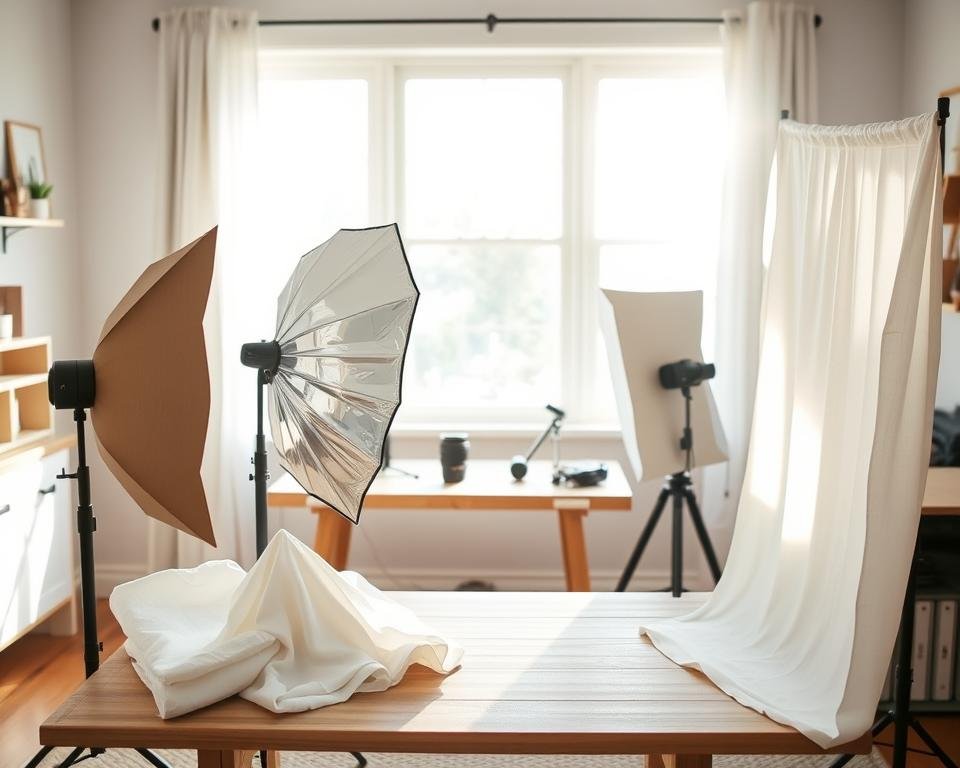
Did you know pro lighting gear can cost more than half of a new photographer’s total budget? When I first started, I quickly found that making a great glow did not need a huge bank account.
I discovered that making my own tools is a cost-effective and fun way to boost my skills. These homemade photography reflectors give a soft light that mimics expensive studio panels.
Using this DIY approach helps me control shadows with great ease during every photo shoot. This simple project is a complete game-changer for anyone who wants high-quality work for less money.
I love how I can customize each piece to fit the specific mood of my shoot. It makes the whole process feel more personal and rewarding for me.
Building these items at home has given me the power to master light in amazing ways. I can now capture the best shots without spending a fortune on fancy gear. It is a smart move for any creator.
Key Takeaways
- Save money on expensive pro gear.
- Improve photo quality with soft light.
- Control shadows and highlights with ease.
- Use simple items found around the house.
- Customize tools for your specific style.
- Master light without a huge budget.
What Are DIY Reflectors and Why Use Them?
DIY reflectors are a budget-friendly solution for photographers. They help improve your lighting setup without the high cost of commercial products.
Reflectors are key in photography. They control light and add depth to your images. They bounce light onto your subject, reducing harsh shadows and improving photo quality.
Benefits of Using Reflectors in Photography
Reflectors offer many benefits in photography. They can:
- Enhance the natural light in your photos
- Reduce harsh shadows and contrast
- Add depth and dimension to your images
- Provide a cost-effective alternative to additional lighting equipment
Common Materials for DIY Reflectors
Choosing the right materials is key for DIY reflectors. Some popular options include:
| Material | Description | Effectiveness |
|---|---|---|
| Aluminum Foil | Highly reflective, easy to shape | High |
| White Cardboard | Soft, diffused reflection | Medium |
| Specialty Reflective Fabrics | Durable, versatile, and portable | High |
You can use these materials alone or together. This way, you can create a reflective surface design that meets your photography needs.
Materials Needed to Create Your Own Reflector
Building a DIY reflector requires the right materials for great photography. The materials you pick can greatly affect the light quality in your photos. This is true for both portraits and static images.
If you’re new to reflective material crafting, knowing your options is key. You can use common items or specialized photography gear.
Cardboard and Aluminum Foil
Cardboard and aluminum foil are a cheap and easy way to make a reflector. The cardboard is strong, and the foil reflects light well. This combo works for both indoor and outdoor shots.
- Pros: Inexpensive, easy to find, and simple to assemble.
- Cons: May not be as durable as other materials, and the aluminum foil can tear easily.
White Bed Sheets or Shower Curtains
White bed sheets or shower curtains are also good for DIY reflectors. They’re soft and reflect light in a gentle way. This is great for soft, diffused light in portraits.
For more tips on using reflectors in photography, see this guide on how to build and use a reflector for better portraits.
Specialty Reflective Fabrics
For a professional look, use specialty reflective fabrics. These are made for photography and come in many colors and textures. They’re pricier but offer top-notch reflection for your photos.
Think about your photography style and the look you want when picking materials. The right materials help you make a reflector that suits your needs and improves your photos.
Step-by-Step Guide to Building a Simple Reflector
You can make a DIY reflector with basic materials. This guide will show you how to make a simple reflector using cardboard and aluminum foil.
Creating a Cardboard Reflector
Start by making the base of your reflector. You’ll need a sturdy cardboard piece that’s big enough to reflect light. Choose a size that fits your photography needs. A bigger piece is more versatile but harder to handle.
Cut the cardboard to the right size with a craft knife or scissors. Make sure the edges are smooth to avoid damage or injury.
Wrapping with Aluminum Foil
Now, wrap your cardboard with aluminum foil. This will make the reflective surface. Use high-quality aluminum foil for the best results.
Wrap the foil tightly around the cardboard, making sure it’s smooth and without air pockets. Use tape to secure it, making sure it sticks well to the cardboard.
Testing Your Reflector
After making your reflector, test it out. Use it in a photography setting to see how it works. Adjust the angle and position to get the lighting right.
| Reflector Surface | Effect on Lighting | Best Use Scenario |
|---|---|---|
| Smooth Aluminum Foil | Sharp, intense reflection | Outdoor portrait sessions |
| Wrinkled Aluminum Foil | Soft, diffused reflection | Studio shooting with soft lighting needs |
| White Cardboard (without foil) | Soft, gentle fill light | Natural light photography |
By following these steps, you can make a useful DIY reflector. Try different materials and methods to find what works best for you.
Creative Ways to Use DIY Reflectors
DIY reflectors let photographers try out new lighting tricks. They help improve photography skills and get professional-looking photos in many settings.
Natural Light Photography
In natural light photography, DIY reflectors soften harsh sunlight. They reduce shadows by bouncing light onto subjects. This makes the light more balanced and pleasing.
For example, outside, a DIY reflector can soften shadows on a subject’s face. It makes their features stand out more.

Studio Shooting
In studios, DIY reflectors help control the lighting. They work with other lights to create different effects. This can range from soft fill lighting to bold highlights.
Here’s a table showing how DIY reflectors are used in studios:
| Reflector Type | Effect | Application |
|---|---|---|
| Silver Reflector | Bright, crisp light | Highlighting specific features |
| White Reflector | Soft, gentle light | Fill lighting, reducing shadows |
| Gold Reflector | Warm, golden light | Adding a warm tone to the subject |
Outdoor Portrait Sessions
DIY reflectors are great for outdoor portraits. They help make the subject’s features look better by reducing shadows. This creates a more even light.
“The use of reflectors in outdoor portrait photography can make a significant difference in the quality of the images produced. By controlling the light, photographers can create more pleasing and professional-looking portraits.”
Photographers can try new things and get great results by using DIY reflectors. They open up creative possibilities in many photography settings.
Tips for Positioning Your Reflector
To get the most out of your DIY reflectors, knowing how to position them is key. Proper positioning can greatly improve your photos’ lighting. This allows for more creative control and better image quality.
Best Angles for Light Reflection
The angle of your reflector is very important for the lighting effect. Try different angles to find the best one for your subject.
When using a DIY reflector, think about the light source and your subject’s position. For outdoor shoots, the sun’s position will guide the best reflector angle.
Adjusting for Changing Light Conditions
Light can change fast, which is common in outdoor shoots. Being able to adjust your reflector quickly is key for good lighting.
If the sun gets blocked by clouds, you might need to move your reflector. Being flexible and quick helps capture the best images.
| Light Condition | Reflector Adjustment | Effect |
|---|---|---|
| Direct Sunlight | Position reflector to bounce light into shadows | Reduces harsh shadows |
| Cloudy | Adjust reflector to soften the light further | Enhances soft, natural lighting |
| Backlight | Use reflector to add light to the subject’s face | Prevents silhouette effect |
Mastering your DIY reflector’s positioning and adjusting as needed can greatly improve your photos.
Improving Your Reflector’s Versatility
Making your reflector more versatile is key to getting different lighting effects in photography. A few smart changes can really boost your photography game.
To make your reflector more adaptable, focus on clever design and material choices. This will help it work well in various situations.
Folding or Collapsible Designs
A folding or collapsible design makes your reflector easy to carry and store. It’s great for photographers who are always on the move or have little space.
- Create a frame that can be easily disassembled and stored in a compact bag.
- Use flexible materials that can be rolled up or folded without damaging the reflective surface.
For example, a lightweight yet strong material for the frame makes it easy to fold and unfold.
Adding Multiple Surfaces for Different Effects
Adding multiple surfaces to your reflector can also increase its versatility. This lets you change your reflector for different shooting needs without needing many reflectors.
Here are some ideas:
- Use different reflective materials, like aluminum foil for a hard light and a white surface for a soft fill light.
- Try colored surfaces to set a mood or atmosphere in your photos.
- Play with textured surfaces to add unique lighting effects.
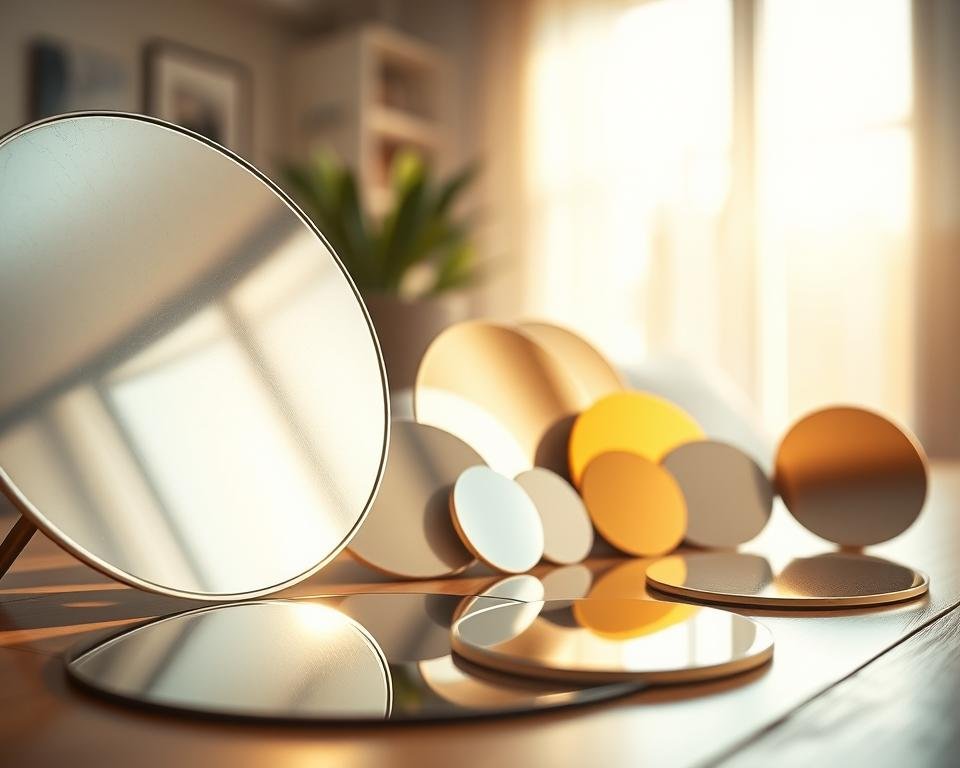
By trying these ideas, you can make a budget-friendly reflector that’s both effective and versatile. It will be a valuable addition to your photography kit.
DIY Reflector Variations for Specific Needs
DIY reflectors let you get creative with your photography. You can make warm or cool surfaces to change your photos. Tailoring your reflector can really improve your photos.
Choosing the right material for your DIY reflector is key. The surface affects the mood and quality of your photos. Let’s explore some options to get the look you want.
Warm vs. Cool Reflective Surfaces
The color of your reflector changes your photos a lot. Warm reflectors, like gold ones, make skin tones look better and feel cozy. Cool reflectors, like silver or white, give a neutral light that’s great for details.
| Surface Type | Effect on Photos | Best Use |
|---|---|---|
| Warm (Gold/Golden) | Adds warmth, enhances skin tones | Portraits, indoor photography |
| Cool (Silver/White) | Provides neutral or cool light | Outdoor photography, product photography |
Photography expert,
“The right reflector can make all the difference in capturing the perfect shot. It’s not just about bouncing light; it’s about controlling the mood of your image.”
DIY Diffusers vs. Reflectors
Reflectors bounce light, while diffusers soften it. Knowing when to use each can make your photos better. DIY diffusers, like tracing paper, are great for softening harsh sunlight.
- Use reflectors to add depth and dimension by controlling light direction.
- Use diffusers to soften light and reduce unwanted shadows.
Trying both reflectors and diffusers can lead to amazing photos. For example, bouncing light with a reflector while diffusing direct sunlight can create perfect lighting.
By using these DIY reflector variations, photographers can improve their work. They can make their photos more professional and interesting.
Maintenance and Care for Your Reflectors
Proper care and maintenance can extend your DIY reflectors’ lifespan. A little upkeep ensures they keep working well. I’ve learned this from my DIY reflector experience.
After using your DIY reflector, clean it to keep its reflective surface in top shape. Dust and dirt can lower its effectiveness. For aluminum foil reflectors, a soft, dry cloth works well. For tougher dirt, a slightly damp cloth is okay, but dry it well to avoid water spots.
Cleaning Techniques
Different materials need different cleaning methods. For example, fabric-wrapped or specialty reflective surfaces might need a gentle cleaner. Always test a small area first to avoid damage.
| Reflector Surface | Cleaning Method |
|---|---|
| Aluminum Foil | Soft, dry cloth; slightly damp cloth for stubborn dirt |
| Specialty Reflective Fabric | Gentle cleaning product; test a small area first |
| White Bed Sheets or Shower Curtains | Mild soap and water; air dry |
Storage Solutions to Preserve Quality
Proper storage is key when not using your DIY reflector. For cardboard reflectors, keep them flat or in a protective cover to avoid bends. Collapsible or foldable reflectors should be clean and dry before storage.
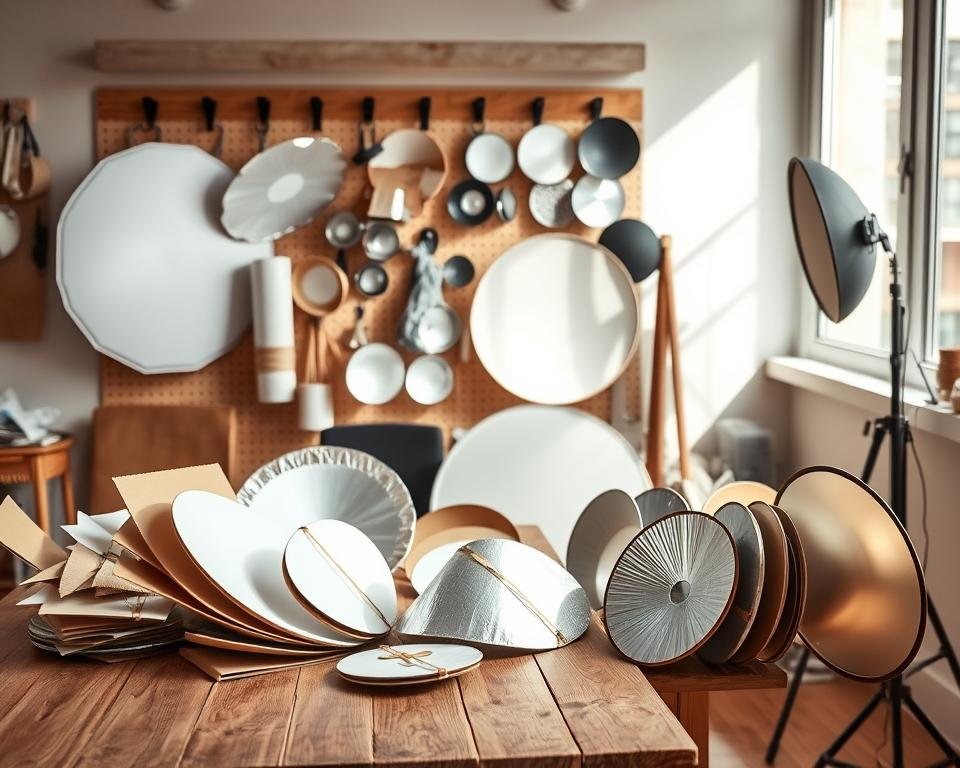
By following these care tips, your DIY reflectors will stay in great shape for your next project. Whether you’re working on a DIY reflector tutorial or building a reflective panel construction, proper care boosts your photography experience.
Comparing DIY Reflectors to Store-Bought Options
As a photographer, I’ve often thought about making my own reflectors versus buying them. This choice depends on cost, performance, and what I like best.
Choosing between DIY and store-bought reflectors has its pros and cons. DIY reflectors are budget-friendly and can be made to fit your needs. On the other hand, store-bought ones are convenient and might be of higher quality.
Cost-Effectiveness of DIY
DIY reflectors are great because they save money. You can use things like cardboard and aluminum foil to make one. This way, you can make a good reflector without spending a lot.
| Material | Cost | DIY Reflector Cost | Store-Bought Reflector Cost |
|---|---|---|---|
| Cardboard | $0 (using existing materials) | $5-$10 | $20-$50 |
| Aluminum Foil | $2-$5 | ||
| Specialty Fabric | $10-$20 | $30-$100 |
The table shows that making a DIY reflector is cheaper than buying one. This is true, even when using common items.
Performance Differences in Reflectors
DIY reflectors can work well, but there are some differences. Store-bought ones are made with better materials. This means they reflect light more evenly and last longer.
“The quality of the reflective surface can significantly impact the final image. High-quality reflectors can provide a more even and controlled light.”
But, with the right materials and construction, DIY reflectors can also do a great job. It’s important to pick the right materials and make the reflector sturdy.
In the end, whether to make or buy reflectors depends on your needs, budget, and what you prefer. Knowing the differences in cost and performance helps you choose the best option for your photography.
Conclusion: My Experience with DIY Reflectors
Thinking back on my DIY reflector journey, I see how much they’ve helped my photography. Making my own reflectors was both fun and a smart money move. It’s improved my photography skills a lot.
Crafting My Own Tools
Working with DIY reflectors has taught me a lot about light. I’ve tried different materials and methods. This has made my photos better, whether I’m shooting outdoors or in a studio.
Experimenting with DIY Techniques
I think you should try making your own DIY reflectors. It’s a great way to get creative and improve your photography. Making your own tools can make your photos stand out. Plus, it’s a fun way to express yourself.