
Did you know the human eye can see about 10 million distinct hues? This amazing fact shows why visual art feels so real and deep. I know that creating a beautiful look is vital for any video project.
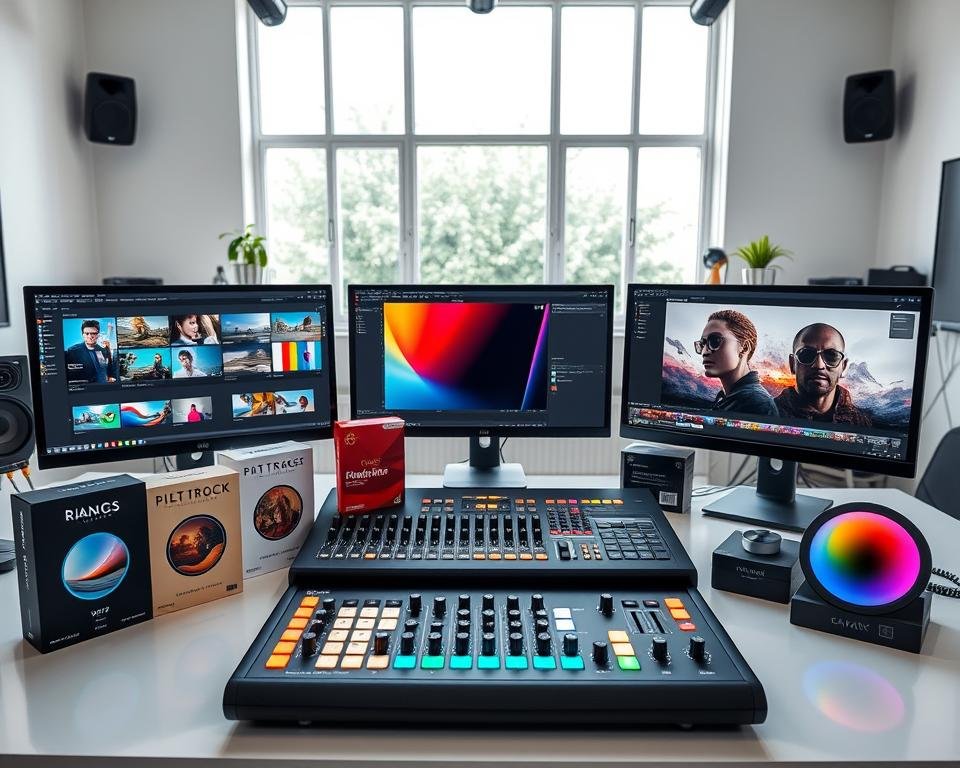
Capturing an audience requires more than just a good camera and lens. I find that using the right color grading products helps me tell a better story. These items range from powerful software to physical control decks that speed up my editing workflow.
I want to guide you through the top choices available right now. Using professional tools can elevate your footage to a whole new level of quality. Choosing effective color grading products will save you time and make your creative vision come to life.
Exploring these tools is the first step toward mastering your craft. I am excited to share my favorites with you in this guide. Let’s look at how you can transform your raw clips into stunning masterpieces.
Key Takeaways
- High-quality visual tools significantly enhance the emotional impact of your films.
- Professional software and hardware save valuable time during the post-production phase.
- Modern editing tools are now more accessible and user-friendly for all creators.
- A consistent visual style helps in building a recognizable brand for filmmakers.
- Investing in the right gear allows for greater creative control over the final image.
- The right workflow ensures your videos look polished and ready for the big screen.
Understanding Color Grading Products
To make a film look amazing, you need to know about color grading and its tools. Color grading makes your footage look better and sets the mood. It’s not just about making it look good; it’s about telling your story visually.
What Is Color Grading?
Color grading changes the color and brightness of your footage to match your vision. It greatly affects your film’s look and feel. Best color grading tools help you get the look you want, from natural to stylized.
Why Color Grading Matters
Color grading is key because it can make your film’s story better by setting the mood. It’s a storytelling tool that lets you share emotions and themes through color. Good color grading makes your film more engaging and real for viewers.
The Impact of Color on Storytelling
Color is vital in storytelling because it changes how people see and feel your story. Warm colors like orange and red can feel warm or tense. Cool colors like blue and green can feel calm or sad.
Here’s a simple breakdown of how different colors can impact storytelling:
| Color | Emotion/Evoked Feeling | Storytelling Impact |
|---|---|---|
| Red | Passion, Energy, Tension | Highlights conflict or intense moments |
| Blue | Calmness, Trust, Sadness | Creates a somber or reflective mood |
| Green | Nature, Harmony, Growth | Symbolizes growth or renewal |
Knowing how color affects your story is key for good color grading. By picking the right colors, you can make your story more engaging and powerful for your audience.
Essential Color Grading Software
Choosing the right software for color grading is key to getting the look you want in your film. The right tool can make your project pop with its own unique look.
“Color grading is not just about making your footage look good; it’s about creating a mood, evoking emotions, and enriching the story,” many experts say. The software you pick is a big part of this.
Adobe Premiere Pro
Adobe Premiere Pro is a top choice in video editing, and its color grading tools are amazing. The Lumetri Color Panel gives you detailed control over your color grading. It’s easy to use, great for both newbies and pros.
DaVinci Resolve
DaVinci Resolve is a favorite for its advanced color grading features. It has a color page for color grading, with tools like curves, wheels, and LUTs. It’s free to use, with optional paid upgrades, making it available to many.
Final Cut Pro
If you’re all about Apple, Final Cut Pro is a strong choice with top-notch color grading tools. The Color tool in Final Cut Pro lets you tweak your footage’s color and look. It’s designed to be easy to use, for a smooth editing process.
Each software has its own strengths and fits different needs and preferences. Whether you’re an experienced pro or just starting, there’s a color grading software out there for you.
Top Hardware for Color Grading
For filmmakers, the right equipment is key to telling a story through visuals. While software is important, the right hardware can make a big difference.
You’ll need high-quality monitors for accurate color display. Also, control surfaces for precise adjustments and powerful graphics cards for demanding tasks.
Color Grading Monitors
A good monitor is essential for a great final product. Look for one with high color accuracy and a wide color gamut. Monitors with HDR support and covering a lot of the DCI-P3 color space are good choices.
Here are some key features to consider in a color grading monitor:
| Feature | Description | Importance Level |
|---|---|---|
| Color Accuracy | Ability to display colors accurately without deviation | High |
| HDR Support | Capability to display High Dynamic Range content | Medium |
| Color Gamut | Range of colors the monitor can display | High |
Control Surfaces
Control surfaces let you make precise color adjustments easily. They often have jog wheels, trackballs, and sliders for hands-on control.
Using a control surface offers several benefits:
- Increased precision in color adjustments
- Faster workflow due to intuitive controls
- Enhanced creativity through hands-on adjustments
Graphics Cards
A strong graphics card is vital for color grading tasks. Look for one with plenty of VRAM and support for the latest graphics tech.
When picking a graphics card for color grading, consider these:
- VRAM: Make sure it meets your project’s needs.
- CUDA/Stream Processors: More means better performance.
- Compatibility: Ensure it works with your software.
The Role of LUTs in Color Grading
LUTs have changed the game in color grading. They are a powerful tool for filmmakers to improve their visual story. LUTs, or Look-Up Tables, are like charts that show how colors in an image should be adjusted. This makes it easy to apply complex color grades with just a few clicks.
What Are LUTs?
LUTs are key in color grading. They help filmmakers get the look they want by applying a set color grade to their footage. This is great for keeping the look consistent across different shots and scenes.
LUTs can be used in many ways. They can be a starting point for more grading or a final touch to enhance a project’s look. They work well with many industry-leading color grading products, making them a flexible tool in post-production.
Using LUTs Effectively
To use LUTs well, you need to know their context. Some LUTs are made for specific cameras or lighting setups. Using a LUT without thinking about these factors can mess up your look.
- Begin with a LUT that fits your project’s style or camera setup.
- Adjust the LUT to match your project’s needs, tweaking colors and contrast as needed.
- See LUTs as a starting point for further grading, not just the final look.
Where to Find Quality LUTs
You can find LUTs from free online resources to premium packs from industry pros. It’s important to check the source’s credibility and if the LUT works with your color grading software.
Some top places for quality LUTs include:
- Official manufacturer websites, which often have LUTs for their cameras.
- Online marketplaces where pros sell their LUT packs.
- Color grading and filmmaking forums and websites.
Knowing what LUTs are, how to use them, and where to find them can greatly improve your color grading. It helps filmmakers achieve a polished, professional look in their projects.
Color Grading Techniques I Love
Color grading is an art form, and I’ve found a few techniques that consistently deliver impressive results. As someone who has worked with various color grading techniques, I have my favorites that make a significant difference in the final product.
Understanding the nuances of color grading is key to achieving that perfect look. For a deeper dive into the world of color grading, I recommend checking out this guide that covers the basics and beyond.
Primary vs. Secondary Color Grading
Primary color grading involves making initial adjustments to the overall image. This includes exposure, contrast, and color balance. It sets the stage for the overall look and feel of your footage.
Secondary color grading allows for more targeted adjustments. It enables you to isolate specific elements within the scene and fine-tune their color properties.
To illustrate the difference, consider the following table:
| Color Grading Type | Description | Key Adjustments |
|---|---|---|
| Primary | Initial adjustments to the overall image | Exposure, Contrast, Color Balance |
| Secondary | Targeted adjustments to specific elements | Isolation, Hue vs. Hue, Hue vs. Saturation |
Using Curves for Greater Control
Curves are a powerful tool in color grading, giving you precise control over the tone and color of your image. By adjusting the curve, you can achieve a more nuanced and sophisticated look. For instance, using advanced color grading solutions available in modern editing software, you can create complex curves that enhance the mood and atmosphere of your scene.
By mastering curves and understanding how to use them effectively, you can take your color grading to the next level. Whether you’re working on a film, commercial, or music video, the ability to fine-tune your color grade with precision is invaluable.
How to Choose the Right Color Grading Product
Choosing the right color grading tool is key to your filmmaking success. It’s about knowing what you need and how much you can spend.
Assessing Your Needs
First, figure out what you need. Think about the projects you do, the software you use, and how much control you want over color grading.
If you work on projects that need teamwork, look for collaborative color grading tools. These tools let many people work together easily.
“The right tool can make all the difference in achieving the desired look for your film. It’s not just about the features; it’s about how it fits into your workflow.”
Here are some key factors to consider when assessing your needs:
- The type of projects you typically work on (e.g., short films, commercials, feature films)
- The software and hardware you’re currently using
- The level of color grading control you need
- Any specific features required (e.g., HDR support, LUT compatibility)
Budget Considerations
When choosing a color grading product, your budget is important. Essential tools for color grading vary in price, from affordable software to pricey hardware.
Here’s a look at some popular color grading software and their prices:
| Software | Price | Key Features |
|---|---|---|
| Adobe Premiere Pro | $20.99/month | Lumetri Color Panel, HDR support |
| DaVinci Resolve | Free/Studio version: $299 | Advanced color grading tools, Fairlight audio integration |
| Final Cut Pro | $299.99 | Color grading tools, HDR support, ProRes encoding |
Think about the value you’ll get from your investment. A more expensive tool might offer advanced features and save you time, making it worth it.
Color Grading Tips for Beginners
Even with the best color grading tools, beginners must learn color theory basics. Color grading is more than just making footage look good. It’s about setting a mood, tone, and improving the story.
First, you need to know the basics. Color grading changes the color and brightness of your footage for a consistent look. It’s both creative and technical, needing a keen eye and color knowledge.
Understanding Color Theory
Color theory helps create harmonious colors and understand color interactions. Knowing the color wheel is key in color grading. The color wheel shows how colors relate to each other.
Key color theory concepts include:
- Complementary colors: Colors opposite each other on the color wheel, used to create contrast.
- Analogous colors: Colors next to each other on the color wheel, used to create a cohesive look.
- Color temperature: Warm colors (like red and orange) can evoke warmth, while cool colors (like blue and green) can evoke calmness.
Basic Adjustments Everyone Should Try
For beginners, a few basic adjustments can greatly improve your footage. These include adjusting exposure, contrast, and color balance.
Exposure adjustment brightens or darkens your image. Contrast adjustment makes light and dark areas stand out. Color balance adjustment removes unwanted color casts for a natural look.
Mastering these adjustments and color theory will help you create stunning films. Your audience will surely be captivated.
Advanced Color Grading Techniques
To improve your color grading, learn about HDR and matching shots. These techniques boost your work’s visual appeal and professionalism.
Working with HDR
Understanding HDR is key to grading HDR content well. HDR brings out more colors and contrast, making your visuals pop.
Benefits of HDR include a wider color range and better contrast. This means your colors will be more vivid and blacks deeper.
- Wider Color Gamut: HDR supports a broader spectrum of colors.
- Increased Contrast: With HDR, you can achieve deeper blacks and brighter highlights.
To grade HDR content, use software that supports HDR. DaVinci Resolve is a top choice, with advanced HDR tools.
Matching Shots for Consistency
Matching shots is vital for project consistency. Adjust color and brightness to make shots look like they belong together.
Techniques for Matching Shots include using reference images and color grading tools like LUTs and color wheels.
- Reference images help match the look and feel of different shots.
- Tools like LUTs and color wheels adjust and match color grading across shots.
| Feature | HDR | SDR |
|---|---|---|
| Color Gamut | Wider color gamut, more vivid colors | Limited color gamut |
| Contrast Ratio | Higher contrast ratio, deeper blacks, and brighter highlights | Lower contrast ratio |
| Brightness | Supports higher peak brightness | Limited peak brightness |
Mastering these advanced techniques will greatly enhance your color grading. Your projects will then shine with improved quality.
Maintaining Color Accuracy
Color accuracy is key in filmmaking. It makes sure the final product looks right on all devices. As a filmmaker, I’ve learned it’s not just about looks. It’s about keeping the story’s visuals true.
To keep colors accurate, you need to know your tools and techniques. This includes calibrating your monitor and learning about color profiles and spaces.
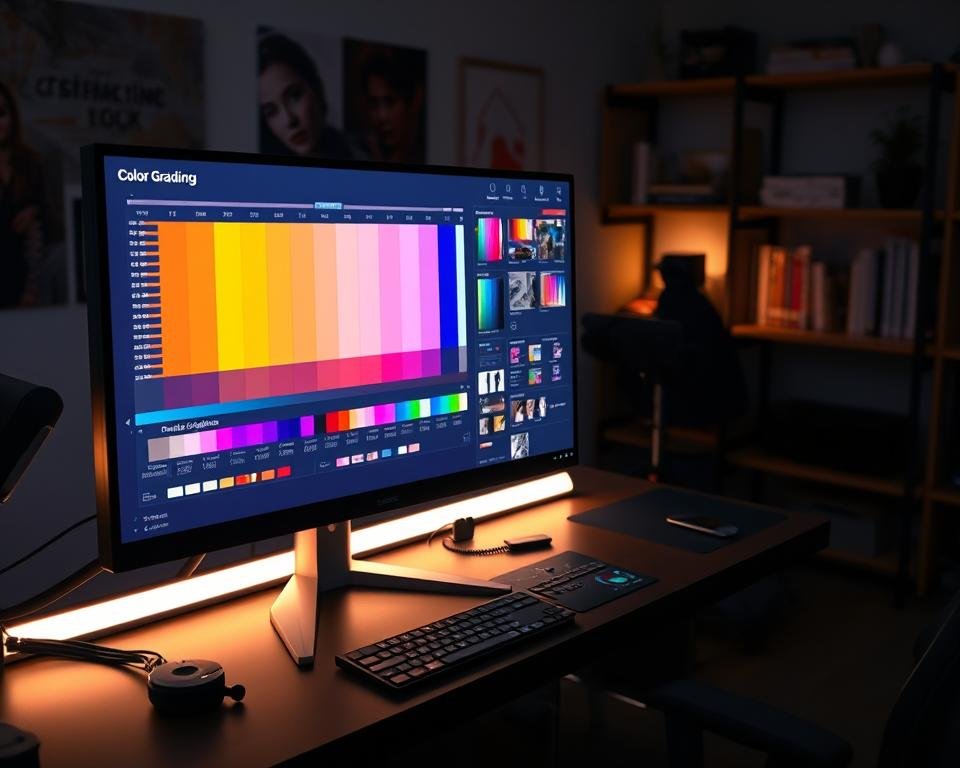
Calibration of Monitors
Calibrating your monitor is the first step to color accuracy. A calibrated monitor shows colors as they really are. Here are some tips for calibrating your monitor:
- Use a calibration device to adjust brightness, contrast, and color balance.
- Make sure your monitor’s color temperature is set to D65 for film and TV.
- Adjust your monitor’s settings to match your workspace’s lighting.
Color Profiles and Spaces
Knowing about color profiles and spaces is key for color accuracy. A color profile tells you how a device shows colors. Color spaces show the range of colors a device can display or capture.
Here are some common color spaces in filmmaking:
- Rec. 709: The standard for HDTV broadcasting.
- DCI-P3: Used in digital cinema for a wider range of colors.
- Rec. 2020: For UHD broadcasting, it’s even wider.
Choosing the right color profile and space makes your film look great on any device. This is part of the color correction essentials. It’s important for consistent color accuracy.
With a calibrated monitor and the right color profiles and spaces, your film will look accurate on all devices. This improves the viewing experience.
Popular Color Grading Products Reviewed
In my journey as a filmmaker, I’ve learned that the right color grading tools can make a big difference. There are many options out there. It’s key to find the ones that stand out for their quality and performance.
My Favorite Software Options
When it comes to software, some products really make color grading easier. Adobe Premiere Pro and DaVinci Resolve are top choices. They offer advanced tools to help achieve the look you want.
Adobe Premiere Pro is great because it works well with other Adobe tools. This makes it a top pick for those already using Adobe. Its Lumetri Color Panel has a wide range of tools that are easy to use.
DaVinci Resolve is a powerhouse for color grading. Its free version is very strong, with many features of its paid version. This makes it perfect for filmmakers on a budget.
| Software | Key Features | Price |
|---|---|---|
| Adobe Premiere Pro | Lumetri Color Panel, Integration with Adobe Tools | $20.99/month |
| DaVinci Resolve | Advanced Color Grading Tools, Free Version Available | Free/Paid |
Hardware that Makes a Difference
While software is important, the right hardware can also make a big difference. Color Grading Monitors and Control Surfaces are two types of hardware that can improve color grading.
A good Color Grading Monitor shows colors accurately. This is key for making precise color grading decisions. Brands like Blackmagic Design offer high-quality monitors for color grading.
Control Surfaces from DaVinci Resolve and Tangent let you control color grading with your hands. This allows for more detailed and expressive grading.
| Hardware | Key Features | Price Range |
|---|---|---|
| Blackmagic Design Monitor | Accurate Color Representation, HDR Support | $1,000-$3,000 |
| DaVinci Resolve Control Surface | Tactile Controls, Customizable | $500-$2,000 |
Collaborative Color Grading Tools
In filmmaking, color grading is more than a technical task. It’s a collaborative art form needing precision, creativity, and teamwork. As projects get more complex, advanced color grading solutions that help teams work together are key.
How to Grade with a Team
Grading with a team means more than just sharing files. It needs essential tools for color grading that let everyone work together in real-time. Cloud-based platforms make it easy for colorists, directors, and cinematographers to collaborate, no matter where they are.
To work well as a team, understanding the project’s vision is vital. Tools that offer real-time feedback and adjustments are essential. This way, the team can ensure the final product matches the director’s vision, using everyone’s skills.
The Benefits of Cloud-Based Solutions
Cloud-based color grading solutions bring many benefits. They improve teamwork, grow with your needs, and are easy to get to. With projects in the cloud, team members can work from anywhere, anytime, on different devices.
This flexibility is great for global projects where team members are far apart. Cloud solutions also have automatic backups and version control. This keeps the latest project version safe and reduces data loss risks.
Using cloud-based color grading tools makes filmmaking easier. It boosts teamwork and lets creators focus on making stunning films that reach audiences everywhere.
The Future of Color Grading
Filmmakers are always searching for the newest color grading tech to tell better stories. The world of color grading is changing fast. New tools are making it easier to create stunning visuals.
Innovations on the Horizon
Technologies like AI and machine learning are being added to color grading software. This makes it simpler to get complex looks and work more efficiently. Companies like Blackmagic Design are already using AI in their products, like DaVinci Resolve.
Trends to Watch
There’s a big push for HDR content, which needs precise color grading. As HDR becomes more popular, the need for gear that supports it will grow. I’m looking forward to seeing how the industry responds and what new tools will come out.