


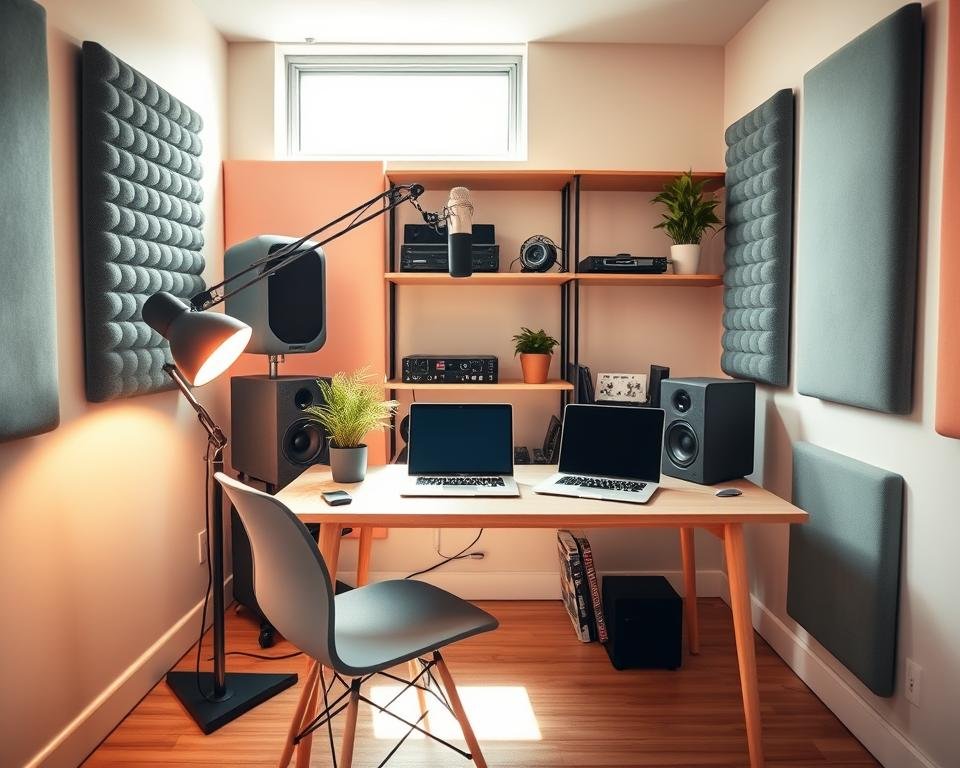
Did you know that nearly 40% of the top songs on streaming platforms today started in simple bedrooms? It’s amazing how modern tech lets us make top-notch sound without spending a lot. You can create a great space by planning your buys wisely.
In this guide, I’ll show you how to set up a budget studio without losing your artistic vision. I aim to make the technical stuff simple and focus on what’s key for your sound. You’ll get a clear plan to pick out the must-have gear and avoid spending too much.
I think your creativity shouldn’t be held back by money. With smart choices and good room acoustics, you can match the quality of pricey studios. Let’s see how you can build a space that sparks your creativity every day.
Key Takeaways
- Strategic planning is the foundation of an affordable workspace.
- Prioritize essential gear like microphones and interfaces first.
- Acoustic treatment often matters more than expensive hardware.
- Free or low-cost software can produce professional-grade results.
- Second-hand markets offer great value for high-end equipment.
- Consistent practice outweighs the need for the latest gadgets.
Understanding the Essentials of a Budget Studio Setup
Getting a budget studio setup right is crucial. You need to know what you want and what you need. This helps in making a space that works well for you.
First, figure out the basic parts of a studio. You’ll need affordable recording equipment. This gear should help you make professional-sounding recordings without spending too much.
What Do I Need for a Basic Studio?
A basic studio needs a few key items. You’ll need a computer, an audio interface, a microphone, and monitoring gear. The quality of these items depends on your projects and needs.
| Equipment | Basic Requirement | Recommended Upgrade |
|---|---|---|
| Computer | Any modern laptop or desktop | Higher RAM and processing power for demanding projects |
| Audio Interface | 2-channel interface for basic recording | Multi-channel interface for complex recordings |
| Microphone | Dynamic microphone for vocals | Condenser microphone for higher sound quality |
Importance of Defining My Goals
Knowing your goals is key when setting up a home recording studio. Are you recording music, podcasts, or voiceovers? Your goals will guide what equipment and space you need.
For instance, music production might need advanced gear and a soundproof room. Podcasting, however, might require less but still needs good sound.
Choosing the Right Space for My Studio
The space for your studio is as important as the equipment. It should be quiet, comfy, and help you stay productive. Think about the room’s size, layout, and how to make it work for you.
By knowing these basics, you can set up a budget-friendly studio. It will meet your needs and help you reach your goals.
Equipment: Where to Invest and Save
Setting up a professional studio doesn’t have to be expensive. It’s all about knowing where to spend and save. Finding the right balance between quality and cost is key.
Essential Tools for My Studio
The heart of any studio is its equipment. For music production, you need a reliable computer, digital audio workstation (DAW) software, a quality microphone, and accurate speakers.
Good monitoring speakers are crucial. They let you hear your music as it really is. This helps you make better mixing choices. A quality microphone is also essential for capturing great sound.
Affordable Alternatives to High-End Gear
High-end gear is tempting, but there are budget-friendly alternatives that offer similar quality at lower prices. Look into refurbished or second-hand gear instead of new.
Many pros started with budget options and still get great results. For example, a USB microphone like the Blue Yeti offers excellent sound quality at a lower cost than professional mics.
| Equipment | High-End Option | Budget-Friendly Alternative |
|---|---|---|
| Microphone | Neumann TLM 103 | Blue Yeti USB Microphone |
| Monitoring Speakers | Genelec M040 | KRK RP5 G3 |
| DAW Software | Ableton Live Suite | Reaper DAW |
The Role of Quality Sound and Lighting
Quality sound is essential in a studio. Good monitoring equipment and acoustically treating your space can greatly improve sound quality.
Lighting is also important, often overlooked. It affects your mood and productivity, making it key to a good studio setup.
By focusing on these areas and making smart choices, you can build a professional studio on a budget. It will meet your needs and help you reach your goals.
Setting Up My Studio: Layout and Design
The layout and design of my studio are key to my creativity. I’m excited to share the details. A well-planned studio boosts my productivity and inspires quality content.
Creating an Efficient Workflow
To work efficiently, I need to plan my studio tasks. For recording audio, I arrange my equipment to reduce echo and improve sound quality. Optimizing my workspace keeps me focused and avoids distractions.
I identify my studio’s main functions and arrange my equipment and furniture. This includes a recording area, mixing station, and editing space.
Soundproofing on a Budget
Soundproofing is vital for a professional studio sound, but it can be pricey. Luckily, there are low-cost studio essentials for good sound quality without spending a lot.
I use DIY methods like adding mass to walls and sealing gaps. Acoustic panels also help reduce echo and improve sound quality. These methods are affordable and effective.
Choosing the Right Color Scheme for My Space
The color scheme of my studio affects my mood and productivity. I choose calming and inspiring colors to stay focused and creative.
When picking colors, I think about my work and the atmosphere I want. For video content, I choose colors that look good and match my brand.
The Importance of Good Software
Good software is key to a successful studio, no matter the budget. The right software can greatly improve audio and video quality. It’s not just about spending a lot; finding the right balance is crucial.
Setting up my studio showed me software’s importance. It affects audio and video editing, mixing, and mastering. There are many affordable options that can deliver professional results without the high cost.
Budget-Friendly Audio and Video Editing Software
There are many affordable editing software options. For audio, Audacity is a top choice for beginners and pros. It’s free, open-source, and has many features like multi-track editing and effects.
For video, DaVinci Resolve is a great, free option with optional paid upgrades. Other options include:
- Audacity for audio editing
- DaVinci Resolve for video editing
- Shotcut for cross-platform video editing
- Lightworks for professional-level video editing on a budget
These options are not only affordable but also flexible and feature-rich. For more on setting up a home studio, check out The Pro Audio Files.
Free Tools That Can Elevate My Production
There are many free tools to enhance studio production. For example, plugins like Voxengo OldSkoolVerb and OTT by Xfer Records can add depth and character to audio without a high cost.
“The right tools can make a significant difference in the quality of your productions. Even on a budget, you can achieve professional-sounding results with the right software and plugins.”
Exploring DAWs for Beginners
For new music producers or podcasters, a DAW is essential. A DAW is where you’ll record, edit, and mix audio. For beginners, Ableton Live Intro or FL Studio Fruity Edition are great choices. They have user-friendly interfaces and many features to help you start.

When picking a DAW, think about your main use. Ableton is good for live performances, while FL Studio is great for beat-making. The key is to try different options and find what works best for you.
Leveraging Online Resources for Learning
Online resources help me improve my studio setup and stay updated. The internet is full of useful information. It can enhance my skills in studio management and production.
Online resources are easy to access. I can learn whenever and wherever I want, as long as I have internet. This is great when I’m busy or need to review something.
Best YouTube Channels for Studio Setup Tips
YouTube is perfect for those who learn better by watching. There are many channels about studio setup and production tips. Some of my favorites are:
- “Studio Setup Pro” and “Production Tips” share budget-friendly studio setup advice.
- Channels like “Soundproofing Tips” and “Lighting for Studios” offer detailed tutorials and reviews.
These channels give me valuable insights and keep me up-to-date with studio setup trends.
Online Courses That Fit My Budget
Online courses are another great learning tool. Sites like Udemy, Coursera, and Skillshare have many courses. I can find ones that match my budget and learning style.
| Platform | Course Topics | Price Range |
|---|---|---|
| Udemy | Studio setup, sound engineering | $10-$50 |
| Coursera | Music production, audio editing | $30-$100 |
| Skillshare | Studio management, creative skills | $15-$30 |
Community Forums and Networking
Community forums and networking are key for connecting with other creatives. Sites like Reddit, Facebook groups, and forums for studio owners are very helpful.
By joining these communities, I can ask questions, share my knowledge, and learn from others. It’s also a good way to find out about affordable studio gear.
Some popular community forums include:
- Reddit’s r/WeAreTheMusicMakers and r/StudioSetup
- Facebook groups for studio owners and producers
- Forums like Gearslutz and Studio Operations
Collaborating and Networking on a Budget
Exploring the world of content creation, I’ve found that success goes beyond just the right gear. It’s about building a community. Working with other creatives is key for growth and success in music and content creation.
“The way to get started is to quit talking and begin doing.” Walt Disney’s words hit home as I start collaborating. It’s scary at first, but it’s vital for learning and improving.
How to Find Like-Minded Creatives
Finding people who share your interests is easy. Just go to local events or join online forums. Social media is also great for connecting with others. For example, I can join Facebook groups or Reddit forums for content creators.
Here are some ways to find your tribe:
- Go to workshops and conferences
- Join online communities and forums
- Be active in social media groups
- Work on projects with other creatives
Utilizing Social Media for Connections
Social media is a powerful tool for making connections. I can use Instagram, Twitter, and LinkedIn to find collaborators. By engaging with others’ content and sharing mine, I build my presence in my niche.
- Find out where your audience hangs out online
- Post content that shows off your skills
- Interact with others by commenting and sharing
Hosting Budget-Friendly Collaboration Events
Hosting events for creatives is a great way to bring people together. You don’t need to spend a lot to host a successful event. Simple gatherings, like potluck dinners, can work wonders.
“Alone we can do so little; together we can do so much.” – Helen Keller
By hosting affordable events, I can build a community. It’s a chance for everyone to grow and learn together.
Marketing My Studio and Services
Now that I have a budget studio setup, it’s time to market it well. I aim to grow my business without spending too much. I need to find cost-effective strategies.
Creating a strong online presence is key. It doesn’t have to cost a lot. I can make a professional website using affordable tools like WordPress or Wix. For tips, I can check out how to set up a home recording studio on a budget.
Building an Online Presence without Spending Much
To build an online presence without spending too much, I can:
- Use social media to show my work and talk to potential clients.
- Make interesting content like blog posts, videos, or podcasts to show my skills.
- Use free or cheap online directories to list my services.
Creating a Portfolio That Stands Out
A great portfolio is crucial for attracting clients. To make mine stand out, I should:
- Show a variety of samples to show my range and versatility.
- Focus on my best work and the results I’ve gotten for clients.
- Use testimonials from happy clients to show my credibility.
“Your portfolio is a reflection of your capabilities, so make sure it shines.” A well-made portfolio can really help attract new business.
Word of Mouth: Leveraging My Network
Word of mouth is a powerful tool. To use my network, I can:
- Ask happy clients to tell their friends about me.
- Work with other industry professionals to reach more people.
- Give rewards for referrals to encourage my network.
By using these strategies, I can market my budget studio setup well. I can attract new clients without spending too much.
Tips for Staying Motivated and Creative
Creating a professional studio on a budget is more than just buying gear. It’s also about staying inspired. I learned that keeping motivated and creative is key to making great work and succeeding.
Setting Realistic Goals for My Projects
Setting achievable goals helps keep me motivated. Breaking down big projects into smaller tasks lets me make steady progress. For example, when working on a music video, I might aim to finish the script, film, or edit each day.
Here’s a simple table showing a goal plan for a music video project:
| Day | Task | Status |
|---|---|---|
| 1-2 | Scriptwriting and Storyboarding | In Progress |
| 3-4 | Filming | Pending |
| 5-7 | Editing | Pending |
Creating a Routine That Works for Me
Having a routine is crucial for staying on track and creative. By setting times for work, rest, and fun, I ensure steady progress. For instance, I dedicate mornings to creative work and afternoons to admin tasks.
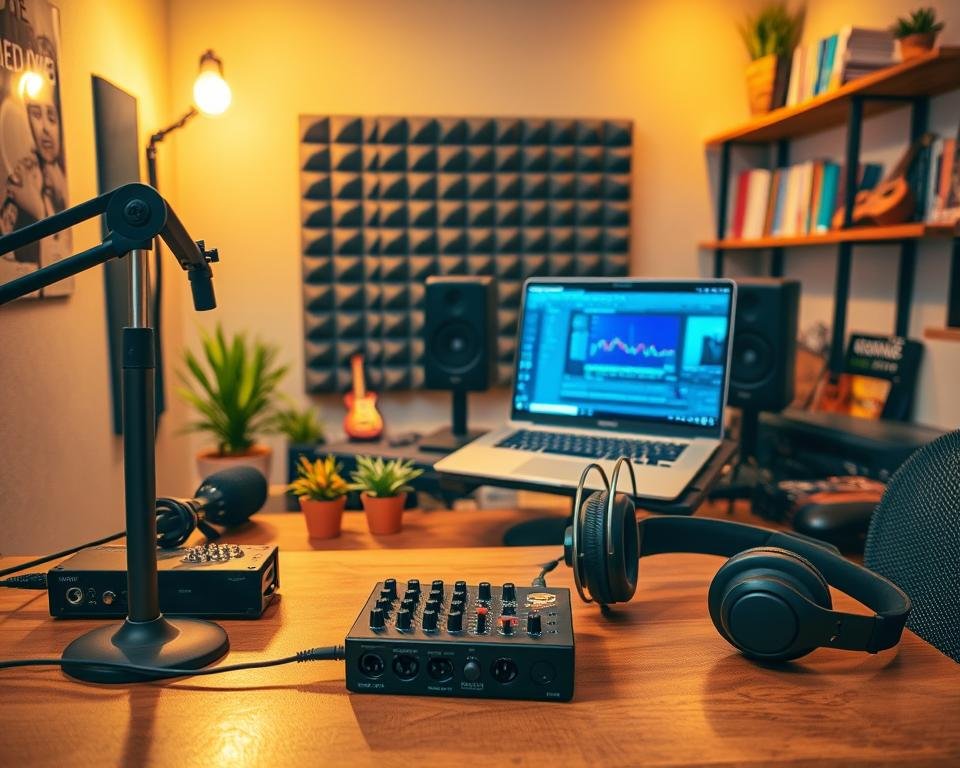
Using affordable recording equipment and free software helps keep costs down. It’s about finding the right mix of cost and quality.
Finding Inspiration in Unconventional Places
Inspiration can come from anywhere. Being open to new experiences keeps me creative. Traveling, reading, or just observing the world around me sparks my creativity.
For example, listening to new music or working with artists from other fields gives me fresh ideas. Staying curious and open-minded helps me grow as a creator.
Frequently Asked Questions About Budget Studio Setups
Setting up a home recording studio on a budget can be tough. But, with the right help, it’s doable. Here, I answer some common questions to guide you better.
Initial Investment
One of the first questions is how much to spend. The cost varies based on your needs and goals. Start with budget-friendly gear to save money. Costs can range from a few hundred to several thousand dollars.
Space Considerations
Can you start a studio in a small space? Yes, you can. Many successful studios are in small rooms or closets. The trick is to use the right layout and soundproofing to cut down on echo and noise.
Avoiding Common Pitfalls
When setting up, avoid mistakes like bad soundproofing, poor equipment, and poor workflow design. Knowing these pitfalls helps you avoid them. This way, you can make a productive and effective studio on a budget.
FAQ
How much should I expect to spend on a professional budget studio setup?
FAQ
How much should I expect to spend on a professional budget studio setup?
You can build a home recording studio for 0 to
FAQ
How much should I expect to spend on a professional budget studio setup?
You can build a home recording studio for $300 to $1,000. Start with essentials like a Focusrite Scarlett audio interface and a Shure SM58 microphone. Don’t buy everything at once. Focus on the core pieces first and add more as you grow.
Can I really start a professional-sounding studio in a small apartment or bedroom?
Yes, you can! I started in a tiny bedroom corner. It’s not about the space, but how you treat it. Use moving blankets or IKEA rugs for sound absorption. Choose compact gear like the Akai MPK Mini to keep your space tidy.
What are the biggest mistakes to avoid when buying inexpensive music production setup gear?
Avoid buying cheap items just because they’re on sale. Focus on a curated list of budget gear. Remember, acoustic treatment is key. Even the best gear won’t help if your room has echo.
Which DAWs for beginners do I recommend for those on a tight budget?
Apple users should try GarageBand. It’s free and still useful today. Windows users, check out Cakewalk by BandLab or Reaper’s trial version. These options offer great features without the high cost of Pro Tools.
How do I handle soundproofing on a budget without buying expensive foam?
Use “found” materials for DIY soundproofing. Old pillows can make great bass traps. Thick curtains can cover windows. You can also use bookshelves or fabric-covered panels to absorb sound.
What is the best way to market my new studio services without a large advertising budget?
Word of mouth and social media are key. Share your studio setup on Instagram and TikTok. Build a portfolio on SoundCloud or YouTube to showcase your work. It’s a free way to promote yourself.
How do I stay motivated when I don’t have the high-end gear I see in professional videos?
Remember, great albums were made with budget gear. Focus on your craft, not the gear. Set small goals and join forums like Reddit’s r/HomeStudio. Your creativity, not the gear, is what matters most.
Are there free tools that can actually elevate my production quality?
Yes, I use free VST plugins from MeldaProduction or Voxengo every day. DaVinci Resolve is also a great free video editing tool. These tools are perfect for learning without spending money.
,000. Start with essentials like a Focusrite Scarlett audio interface and a Shure SM58 microphone. Don’t buy everything at once. Focus on the core pieces first and add more as you grow.
Can I really start a professional-sounding studio in a small apartment or bedroom?
Yes, you can! I started in a tiny bedroom corner. It’s not about the space, but how you treat it. Use moving blankets or IKEA rugs for sound absorption. Choose compact gear like the Akai MPK Mini to keep your space tidy.
What are the biggest mistakes to avoid when buying inexpensive music production setup gear?
Avoid buying cheap items just because they’re on sale. Focus on a curated list of budget gear. Remember, acoustic treatment is key. Even the best gear won’t help if your room has echo.
Which DAWs for beginners do I recommend for those on a tight budget?
Apple users should try GarageBand. It’s free and still useful today. Windows users, check out Cakewalk by BandLab or Reaper’s trial version. These options offer great features without the high cost of Pro Tools.
How do I handle soundproofing on a budget without buying expensive foam?
Use “found” materials for DIY soundproofing. Old pillows can make great bass traps. Thick curtains can cover windows. You can also use bookshelves or fabric-covered panels to absorb sound.
What is the best way to market my new studio services without a large advertising budget?
Word of mouth and social media are key. Share your studio setup on Instagram and TikTok. Build a portfolio on SoundCloud or YouTube to showcase your work. It’s a free way to promote yourself.
How do I stay motivated when I don’t have the high-end gear I see in professional videos?
Remember, great albums were made with budget gear. Focus on your craft, not the gear. Set small goals and join forums like Reddit’s r/HomeStudio. Your creativity, not the gear, is what matters most.
Are there free tools that can actually elevate my production quality?
Yes, I use free VST plugins from MeldaProduction or Voxengo every day. DaVinci Resolve is also a great free video editing tool. These tools are perfect for learning without spending money.