


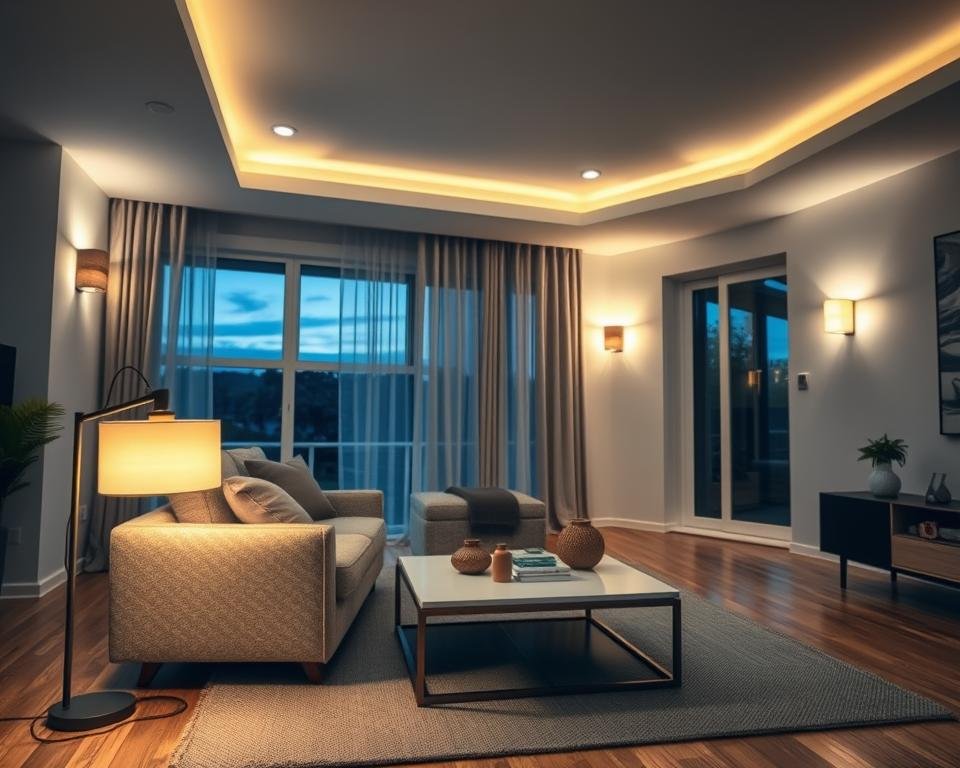
Did you know the average American spends nearly 90% of their time inside? This fact shows how important good lighting is for our mood and work every day. I think the right light can make a place feel welcoming.
Choosing the right lights is more than picking a bulb. It’s about setting up a space that feels both useful and inviting. Even small changes can greatly affect how a room feels.
In this article, we’ll talk about how to brighten up your home. We’ll see how *artificial* lighting can make your home look good and work better. My aim is to help you create a cozy and professional space.
Knowing your home’s layout is key to a better life. I’ve learned how light changes how we see our homes. We’ll find ways to make any dark spot shine.
Key Takeaways
- Discover how illumination affects your psychological well-being.
- Learn to choose the best fixtures for every room.
- Create a welcoming atmosphere for your guests easily.
- Understand the impact of indoor radiance on daily productivity.
- Enhance your home style with smart source placement.
- Master the basics of modern residential design.
Understanding the Basics of Artificial Lighting
Artificial lighting is key for improving any space. It changes how a room looks and works. Knowing about it is important for design.
What is Artificial Lighting?
Artificial lighting uses man-made light to brighten up a room. It includes many types, like LED lighting and old-fashioned bulbs. For more on artificial lighting, check out this article.
Importance of Lighting in Design
Lighting is essential in design. It shapes the look and feel of a space. Good lighting design makes a room cozy and inviting. In commercial lighting, it can even change how people act and work.
Types of Artificial Lighting
To make a space bright and welcoming, knowing about artificial lighting is key. There are three main types: ambient, task, and accent lighting. Each has its own role and can change how a room feels.
Ambient Lighting
Ambient lighting lights up a whole area, making it feel cozy and inviting. Ceiling lights like recessed lights or chandeliers are common choices. It sets the mood of the room.
In a living room, it makes the space perfect for unwinding. In offices, it helps create a professional yet friendly vibe.
Task Lighting
Task lighting focuses on areas where you do specific tasks, like reading or cooking. It’s brighter than ambient lighting and often comes from desk lamps or under-cabinet lights.
It’s vital for detailed work to reduce eye strain and boost productivity. For example, in a kitchen, it lights up countertops for easier food prep.
Accent Lighting
Accent lighting brings attention to certain features or objects, like art or architectural details. Spotlights, track lighting, or picture lights are used for this.
It adds depth and interest to a room, making it more engaging. In a gallery, it highlights art pieces, focusing attention on them.

| Type of Lighting | Purpose | Examples |
|---|---|---|
| Ambient Lighting | Provides overall illumination | Ceiling fixtures, recessed lights, chandeliers |
| Task Lighting | Illuminates specific task areas | Desk lamps, under-cabinet lighting, pendant lights |
| Accent Lighting | Highlights specific features or objects | Spotlights, track lighting, picture lights |
The Role of Natural Light
Natural light is very important. It affects our energy use and well-being. It changes our mood, productivity, and health.
When designing spaces, we must use natural light wisely. This makes our areas more enjoyable and saves energy.
Benefits of Natural Light
Natural light has many benefits. It improves our mood, boosts productivity, and cuts energy use. It also helps our vitamin D levels, keeps our body clocks in check, and sharpens our minds.
“Exposure to natural light is essential for our well-being, as it influences our mood, energy levels, and overall health.”
The main benefits of natural light are:
- It makes us feel better and less stressed.
- It helps us stay focused and productive.
- It means we use less artificial light, saving energy.
- It boosts our health and happiness.
How to Maximize Natural Light
To get the most natural light, try these tips:
| Strategy | Description | Benefits |
|---|---|---|
| Use Mirrors | Place mirrors opposite windows to reflect natural light | Increases light distribution, makes rooms appear larger |
| Install Skylights | Add skylights to bring in natural light from above | Provides additional light sources, enhances ambiance |
| Optimize Window Placement | Strategically place windows to capture natural light | Maximizes natural light intake, reduces need for artificial lighting |
Using these tips can greatly improve your space’s natural light. This makes your area more welcoming and energy-efficient.
In conclusion, natural light is key to our well-being. Knowing its benefits and how to use it is vital for creating healthy, sustainable spaces.
Choosing the Right Bulbs for Your Space
Choosing the right bulbs for your space is important. It affects the room’s ambiance, functionality, and energy use. The type of bulb you pick can make a big difference.
First, you need to decide between LED and incandescent bulbs. Both have their own benefits and drawbacks.
LED vs. Incandescent
LED bulbs are energy-efficient and last a long time. They use less energy and can last up to 25 times longer than incandescent bulbs. LEDs are also better for the environment because they don’t have toxic chemicals like mercury.
Incandescent bulbs have been around for over a century. They heat a filament to glow. They’re cheap to buy but use more energy and don’t last as long as LEDs.
LED bulbs are better because they save energy and last longer. But, they cost more to buy upfront.
Wattage and Brightness
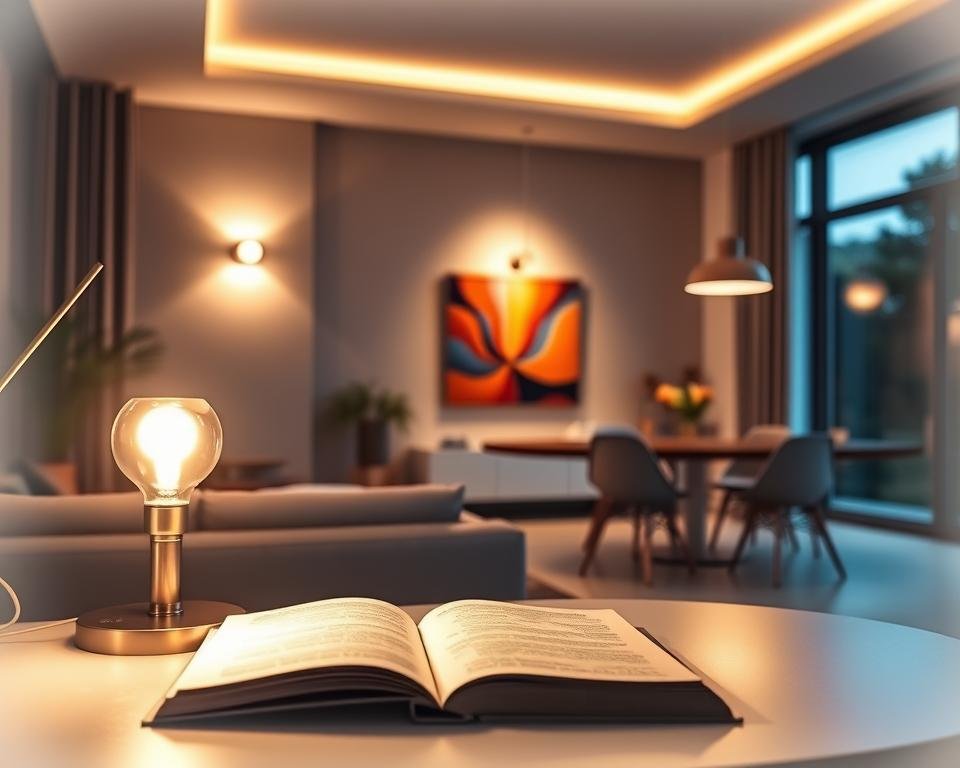
Wattage and brightness are key when picking bulbs. Wattage shows how much energy a bulb uses. Brightness is measured in lumens. Before, more wattage meant brighter bulbs. But now, energy-efficient bulbs like LEDs change this.
An LED bulb might use only 9 watts to match a 60-watt incandescent bulb’s light. Always check lumens, not watts, to get the right brightness.
- Low brightness: 100-200 lumens (suitable for nightlights or ambient lighting)
- Medium brightness: 300-500 lumens (suitable for reading lamps or task lighting)
- High brightness: 700-1000 lumens (suitable for main lighting fixtures)
Knowing the differences between LED and incandescent bulbs helps you choose the right ones. Think about wattage and brightness to meet your lighting needs.
Lighting for Different Rooms
Different rooms in your home have unique lighting needs. Good lighting makes a room feel right and work well. It’s key to match lighting to each room’s needs.
Living Room Lighting Ideas
The living room is where families and friends hang out. To make it welcoming, mix different lighting types. Layered lighting includes ambient, task, and accent lights for a cozy feel.
- Table lamps or floor lamps are great for reading or other tasks.
- Dimmers let you change the light level for any event.
- LED bulbs are energy-smart and last a long time.
Bedroom Lighting Recommendations
Bedroom lighting should help you relax. Soft, warm light makes it easier to wind down. Think about string lights or table lamps with soft shades.
For a good night’s sleep, consider these tips:
- Dimmers help adjust the light for reading or sleeping.
- Choose bulbs with a warm color (2700K-3000K) for relaxation.
- Avoid bright lights that can mess with your sleep.
Kitchen Lighting Essentials
Kitchens need bright, useful lighting. Mix overhead, task, and accent lights for a bright, welcoming space.
Here are some kitchen lighting tips:
- Under-cabinet lights brighten countertops and cut shadows.
- Pendant lights or recessed lights are perfect for cooking.
- A dimmer switch lets you adjust the light for different tasks.
Smart Lighting Solutions
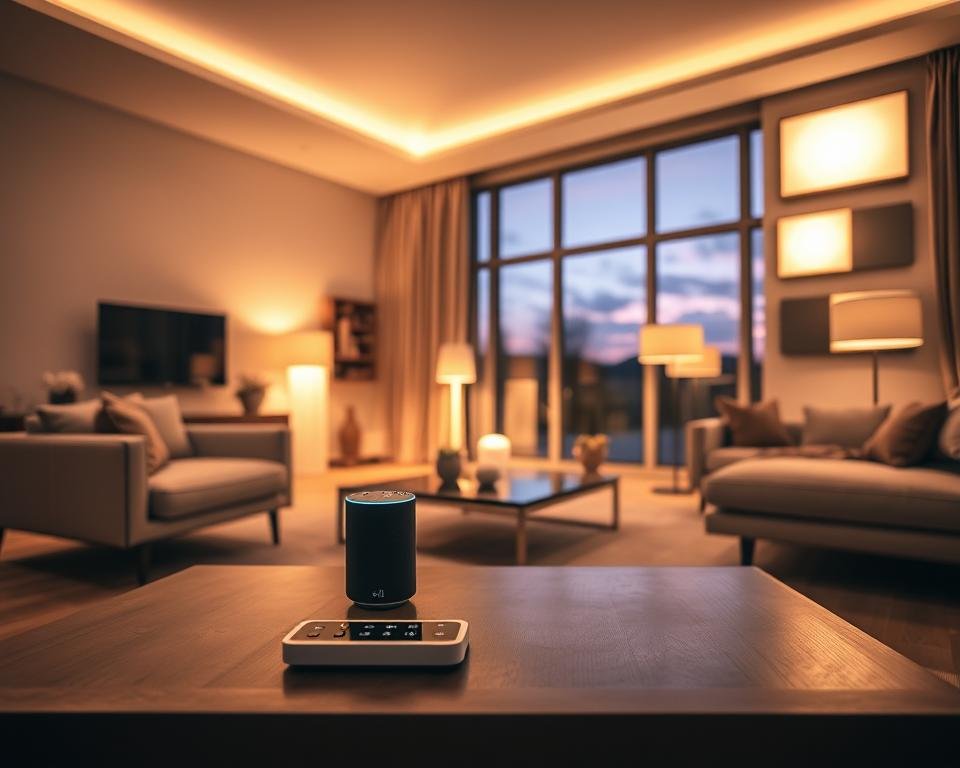
Smart lighting is changing how we light our spaces. It brings convenience and saves energy. These systems let you control lights from anywhere and set up custom lighting plans.
Smart lighting makes rooms look better and saves a lot of energy. It uses new tech like LED and IoT. This makes lighting better for our planet and more flexible.
Benefits of Smart Lighting
Smart lighting can be controlled from your phone or voice assistants. This lets you change light levels, turn them on or off, and set schedules from anywhere.
It also saves energy by using light wisely. It turns lights on when you’re there and off when you’re not. This cuts down on energy use and lowers bills.
- Enhanced convenience through remote control and scheduling
- Energy savings through optimized lighting usage
- Improved safety with automated lighting controls
Popular Smart Lighting Products
Many brands lead in the smart lighting market. They offer products for all kinds of needs and tastes.
| Product | Features | Compatibility |
|---|---|---|
| Philips Hue | Color changing, dimming, scheduling | Amazon Alexa, Google Assistant |
| LIFX | Color changing, dimming, effects | Apple HomeKit, Amazon Alexa |
| Belkin Wemo | Dimmable, scheduling, remote access | Amazon Alexa, Google Assistant |
When picking a smart lighting system, think about a few things. Look at if it works with your other smart home stuff. Also, check out its features and the cost.
Energy Efficiency in Lighting
Energy efficiency in lighting is key to reducing our carbon footprint. It’s vital for creating sustainable living and working spaces. Knowing how to choose energy-efficient lighting is essential.
Understanding the difference between lumens and watts is important. Lumens measure visible light, while watts measure power use. LED lighting offers brighter light with less power than traditional bulbs.
Understanding Lumens and Watts
Knowing about lumens and watts helps us make better lighting choices. More lumens mean brighter light, and less watts mean less energy use. For example, an LED bulb can be 800 lumens with just 9 watts. This is much less than the 60 watts needed for incandescent bulbs.
| Light Source | Lumens | Watts |
|---|---|---|
| Incandescent Bulb | 800 | 60 |
| LED Bulb | 800 | 9 |
| Halogen Bulb | 800 | 43 |
Tips for Reducing Energy Consumption
There are many ways to cut down on energy use through lighting. Switching to LED lighting is a big step, as LEDs need much less energy. Smart lighting controls also help save energy. For more tips, check out https://designlights.org/news-events/news/lighting-control-strategies/.
Using dimmers and occupancy sensors are also good ideas. Dimmers let you adjust light levels, and sensors turn lights off when not needed. These actions can greatly reduce energy use and help our planet.
The Psychological Impact of Lighting
Lighting does more than just light up a room. It can make us feel better or worse. The way lighting affects our minds is complex and can change our daily lives.
Understanding the psychological impact of lighting is key. It helps us make spaces that are good for our minds and work. Lighting can change how we feel, our energy, and how focused we are.
Mood and Lighting
Lighting greatly affects our mood. Bright lighting can make us feel more awake and happy. But, dim lighting can make us feel sleepy if it’s too dark.
The color of the light also matters. Cool white light makes us more alert and is great for work. Warm white light is cozy and good for relaxing at home.
Lighting for Productivity
For tasks that need focus, like reading or computer work, task lighting is very helpful. It shines light right where you need it, easing eye strain and making things clearer.
In offices, mixing ambient and task lighting helps people work better. Being able to change the light’s color and brightness helps adjust the space for different tasks.
By picking and adjusting our indoor lighting, we can make spaces that help us work better and feel better overall.
Decorative Lighting Options
Decorative lighting is more than just a necessity; it’s a chance to add personality to your home. The right fixtures can change a room’s feel, making it more welcoming and showing off your style.
Decorative lighting offers a wide range of choices. You can find everything from modern and sleek to vintage and eclectic. Unique fixtures can be eye-catching, sparking conversations and drawing attention.
Unique Fixtures and Styles
Choosing decorative lighting is a chance to show off your personality. Whether you love the elegance of crystal chandeliers or the rustic charm of mason jar pendants, there’s something for everyone.
- Modern fixtures with clean lines and minimalist designs
- Vintage pieces that add a touch of nostalgia and character
- Industrial-style lighting for a rugged, urban look
How to Add a Personal Touch
Adding a personal touch with decorative lighting is more than picking a fixture that looks good. It’s about creating a look that shows your style and fits with your home’s décor.
To do this, consider these tips:
| Tip | Description |
|---|---|
| Layer Lighting | Use a mix of light sources to add depth and interest. |
| Consider the Room’s Purpose | Different rooms need different lighting. For example, kitchens need task lighting, while living rooms are better with ambient lighting. |
| Don’t Forget About Color | The color of your lighting affects the room’s feel. Warm tones create coziness, while cool tones energize a space. |
By carefully choosing and placing decorative lighting, you can make your home more beautiful and truly yours.
Maintaining Your Lighting Fixtures
Keeping your lighting fixtures in good shape is key. It makes sure they work well and safely. Regular care helps them last longer and keeps your space looking great.
Tips for Regular Cleaning
Dust and dirt can make your lights less bright. To avoid this, gently dust them with a soft cloth. For a deeper clean, turn off the power and use a damp cloth. This keeps your lights shining bright.
Knowing When to Replace Bulbs
Changing bulbs on time is vital for good lighting. LED bulbs, for example, can last up to 25 times longer than old bulbs. Check your bulbs often and replace them when they start to fade or go out. This is very important for outdoor lights, as a dead bulb can be a safety risk.
By following these easy tips, you can keep your lights working well. This makes sure your space stays bright and welcoming.