
Did you know that viewers spend nearly 40% more time looking at photos that place subjects off-center? I once thought that putting everything in the middle was the only way to shoot a clear image. But, everything changed for me when I started using photography accessories to guide my creative eye.
Using specialized gear helps me line up my shots with perfect balance and harmony. These items take the guesswork out of framing. They let me focus on the raw emotion of the moment. You don’t need expensive equipment, but the right helpers can improve your craft.
In this guide, I will show you which items actually help your unique artistic vision. We will look at how simple tools can turn a standard snapshot into a gallery-worthy piece. Let’s explore how to make your work stand out from the crowd with ease.
Key Takeaways
- Understand why off-center subjects attract more visual attention.
- Discover how simple tools can fix common framing mistakes.
- Learn to use grids to create more balanced and professional images.
- Identify the best gear to improve your daily photography workflow.
- Master the art of visual storytelling through better composition.
- Find affordable ways to elevate the quality of your personal portfolio.
Understanding the Rule of Thirds in Photography
Divide your image into thirds both ways to make your photos more balanced and interesting. This method is called the rule of thirds. It’s a key rule in photography.
What is the Rule of Thirds?
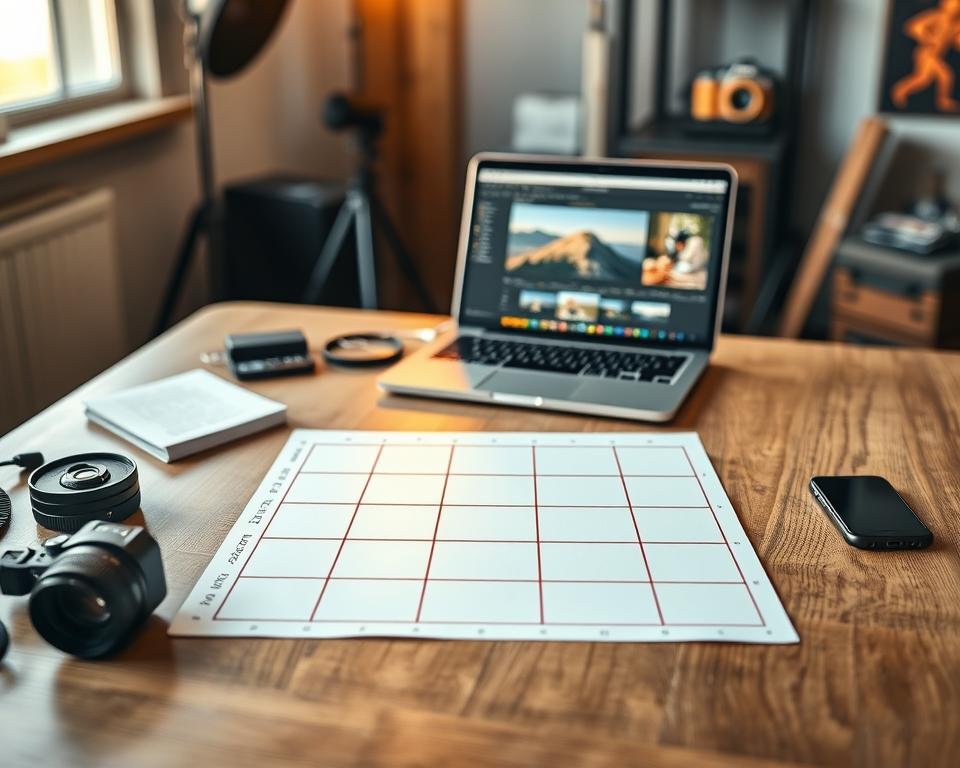
The rule of thirds divides an image into nine parts with two horizontal and two vertical lines. This grid helps photographers place key elements in the scene. Composition tools like grid lines on cameras or apps make it easier to follow this rule.
Why is it Important?
The rule of thirds makes images more appealing by avoiding centering the subject. By placing your subject off-center, you create a more dynamic photo. This rule boosts creativity and encourages trying out different framing options.
| Benefits of Rule of Thirds | Description |
|---|---|
| Improved Composition | Creates more balanced and visually appealing images |
| Enhanced Creativity | Encourages experimentation with different framing options |
| Better Subject Placement | Helps in placing the subject off-center for more dynamic compositions |
Essential Gear for Rule of Thirds Composition
Getting the right camera gear is key to visual balance in photography. The right tools can greatly improve your photo’s quality and composition.
Recommended Cameras for Beginners
For beginners, a good camera is the first step. Look for cameras with manual controls and high image quality. Here are some top picks:
- Canon EOS Rebel
- Nikon D3500
- Sony Alpha a6400
Lenses that Help Achieve the Rule of Thirds
The right lens is vital for rule of thirds composition. Prime lenses, for instance, boost creativity. They help make your subject pop by creating a shallow depth of field.
Tripods for Steady Framing
A tripod is key for steady framing, perfect for low light. It lets you focus on composition without camera shake worries.
Here are some top tripods:
- Manfrotto BeFree
- Joby GorillaPod
- Gitzo GT3543LS
Investing in the right camera gear can greatly enhance your photography. It helps achieve better visual balance in your shots.
Advanced Tools to Perfect Your Shots
Photographers can improve their skills with the right tools. The rule of thirds is key in photography. Modern tech helps master this rule.
Right software and apps guide you in applying the rule of thirds. They offer grid overlays and crop guides. These tools help you get your composition just right.
Editing Software for Rule of Thirds
Editing software is vital for perfecting your photos. Adobe Lightroom and Photoshop have advanced features. They let you crop and adjust images to follow the rule of thirds.
Adobe Lightroom’s crop tool has a grid overlay. It helps align your image with the rule of thirds. Photoshop’s grid feature allows for precise adjustments to your image layout.
Smartphone Apps to Guide Composition
Smartphone apps are also great for applying the rule of thirds. Apps like ProCam and Camera+ have grid overlays and manual focus controls. They help you compose your shots.
These apps show an image layout grid on your camera screen. It makes it easy to place your subject on the grid lines. Using these apps can make your photos more balanced and appealing.
With these advanced tools, you can enhance your photography skills. You’ll create images that are both beautiful and well-composed, following the rule of thirds.
Practical Tips for Applying the Rule of Thirds
Improving your photography starts with the rule of thirds. It divides your image into nine parts with lines that go both ways. Place key artistic elements on these lines or where they meet for better balance and appeal.
Framing Your Subject Effectively
When framing, put your subject off-center, not right in the middle. This makes your photo more lively. For example, place a person’s eyes or shoulders on the top third line. It adds depth and grabs the viewer’s attention.
Using the Grid Feature on Your Camera
Many cameras, even smartphones, have a grid feature in settings. It shows a grid on your screen to follow the rule of thirds. This composition tool makes it easier to line up your shot, improving your photo.
Balancing Elements in the Frame
It’s important to balance elements in your photo for harmony. When using the rule of thirds, think about other parts of the scene. For instance, if your main subject is on one side, add something on the other side. Use color, texture, or shape to achieve this balance.
| Composition Technique | Description | Effect |
|---|---|---|
| Placing subject off-center | Position subject along the grid lines or at intersections | Creates a more dynamic composition |
| Using grid feature | Enable grid overlay on camera screen | Helps align shot according to rule of thirds |
| Balancing elements | Include other elements to counterbalance the main subject | Creates a harmonious composition |
Creating Compelling Landscapes with Rule of Thirds
To capture stunning landscapes, understanding and applying the rule of thirds is key. It helps in creating compositions that are engaging and pleasing to the eye. When shooting landscapes, I imagine the scene divided into thirds both ways. Then, I place interesting features along those lines or at their intersections.
Tips for Outdoor Photography
Look for scenes with interesting foreground elements along the lower third line. This adds depth to your image. Using a photography accessory like a polarizing filter can also enhance colors and contrast, making your photos more compelling.
Be mindful of the lighting conditions. Early morning and late afternoon are best for landscape photography. The soft, warm light during these times is ideal.
Utilizing Natural Lines and Textures
Natural lines and textures can greatly enhance your landscape photos. Look for leading lines like roads, shorelines, or paths. These can guide the viewer’s eye into the scene.
Textures like rocky terrains, forests, or sandy dunes add depth and interest. Place them according to the rule of thirds for the best effect.
By applying these techniques and being patient, you can capture stunning landscape photos. These photos will not only be visually stunning but also tell a story.
Portrait Photography and the Rule of Thirds
Portrait photography gets a big boost from the rule of thirds. It makes images more dynamic and interesting. By using this rule, you can make your portraits more visually appealing.
When taking a portrait, where you place your subject is key. Instead of centering them, try placing them off-center. Use the grid lines that split the image into thirds to guide you.
Positioning Faces and Bodies
Positioning faces and bodies is a big part of using the rule of thirds in portraits. Placing your subject’s eyes or shoulders on the upper third line can make the image more balanced and engaging.
For full-body shots, align the subject’s feet or body with the grid lines. This approach makes the composition more dynamic and interesting.
Enhancing Mood with Composition
The rule of thirds can also improve the mood of your portraits. By carefully placing your subject and other elements, you can create a specific atmosphere or emotional response.
For instance, leaving negative space in the direction the subject is facing can suggest freedom or contemplation. On the other hand, filling the frame with the subject can show intensity or focus.

Try out different compositions and see how the subject interacts with the grid lines. This can really enhance your portrait photography skills.
Using the Rule of Thirds in Sports Photography
The rule of thirds is a key tool in sports photography. It helps photographers take more interesting pictures. By dividing the frame into thirds, both horizontally and vertically, they find the best spots to focus on.
When using the rule of thirds in sports, think about the movement and action. This method makes photos more lively and grabs the viewer’s attention.
Capturing Action Shots
To get great action shots, you need good timing and knowledge of the sport. Putting the athlete or action at a third’s intersection point makes the photo better. Using the right camera gear also boosts your shots’ quality.
For example, in soccer, placing the player kicking the ball at an intersection point makes the photo more exciting. A fast lens and a camera with good autofocus are key for quality action shots.
Timing and Composition Strategies
Timing is key in sports photography. Being ready to capture the action at the right moment is essential. The rule of thirds helps plan the composition, placing the subject right in the frame.
Focus on the game’s key elements and guess where the action will happen. Using the rule of thirds grid on your camera or editing software helps get a great shot.
| Composition Strategy | Description | Benefit |
|---|---|---|
| Placing the subject at intersection points | Positions the athlete or action at one of the four intersection points | Creates a more balanced and engaging composition |
| Using the grid feature | Activates the rule of thirds grid on the camera or editing software | Helps in achieving a well-composed shot |
| Anticipating the action | Focuses on key elements of the game or event | Improves timing and composition |
By using these strategies and the rule of thirds, sports photographers can make their photos more impactful. This makes the photos more engaging for the viewer.
Composing with Multiple Subjects
When you’re taking photos with more than one person, using the rule of thirds can really make your pictures pop. This method helps spread out your subjects in the frame. It makes your photos more balanced and fun to look at.
To get good at taking photos with many subjects, knowing how to place them is key. The rule of thirds grid is a great composition tool. It helps you put your subjects at the right spots or along the lines.
Group Photos and the Rule of Thirds
Using the rule of thirds in group photos can really change how they look. Instead of putting everyone in the middle, try placing them off-center. The grid lines can help you find the best spots.
For example, when you’re taking a group photo, put the main person at one of the grid intersections. Then, arrange the others along the grid lines. This makes your photo more lively and interesting.
| Composition Technique | Description | Effectiveness |
|---|---|---|
| Off-center placement | Placing the main subject off-center using the rule of thirds grid | High |
| Grid line alignment | Aligning subjects or elements along the rule of thirds grid lines | High |
| Intersection placement | Placing key elements at the intersections of the grid lines | Very High |
Interacting Elements in a Scene
In scenes with lots of moving parts, the rule of thirds helps with visual balance. By placing important elements on the grid lines or at intersections, you create a story in your photo.
For instance, in photos of people talking, the rule of thirds helps you place the main figures. It guides the viewer’s eye through the scene. This is super useful in documentary or street photography, where showing how people interact is key.
To get better at composition, check out resources like Mastering Composition: Understanding the Rule of Thirds in Photography. It offers detailed advice on using the rule of thirds in different photography situations.
Common Mistakes to Avoid
The rule of thirds can greatly enhance your photography. Yet, there are common errors to steer clear of. Knowing these pitfalls will elevate your photography skills.
When using the rule of thirds, it’s easy to focus on placing your subject right. But, forgetting about the background can make your photos messy or unfocused.
Overlooking Background Elements
Not paying attention to what’s behind your subject is a common mistake. A messy or distracting background can spoil a good photo. Always take a moment to check the area behind your subject and adjust your shot as needed.
- Look for distracting elements like branches, signs, or other objects that might take away from your subject.
- Use a shallow depth of field to blur the background and highlight your subject.
- Try changing your angle or position to simplify the background.
Ignoring Symmetry
Ignoring symmetry when it’s present can mean missing a powerful composition tool. Symmetry can add a sense of order and calm to your photos.
- Search for reflective surfaces like water or glass for a symmetrical effect.
- Use architecture to your advantage by capturing symmetrical buildings or patterns.
- Experiment with different angles to find the most symmetrical composition.
By being aware of these common mistakes and avoiding them, you can greatly improve your photography. This will help you take more compelling photos using the rule of thirds.
Rule of Thirds in Video Production
Video production greatly benefits from the rule of thirds. This technique makes visuals more dynamic and engaging. It’s a key part of visual storytelling.
The rule of thirds isn’t just for photos; it works well in videos too. It helps create balanced and pleasing visuals when framing shots.
Framing Your Shots for Dynamic Visuals
When setting up shots for video, think about how the rule of thirds can improve your visuals. Place important elements along the thirds lines or at their intersections to add depth and interest.
For example, filming a subject off-center, on either the left or right third, makes the shot more engaging. This is great for interviews or when following a subject through a scene.
Editing Tips for Video Projects
In editing, the rule of thirds can make your video flow better. Think about the composition of each shot and how it fits into the story.
Here’s a simple table to show how to use the rule of thirds in editing:
| Scenario | Rule of Thirds Application | Visual Effect |
|---|---|---|
| Interview Shots | Position subject on the left or right third | Creates a more engaging composition |
| Landscape Shots | Place horizon on the top or bottom third line | Enhances the sense of depth |
| Action Sequences | Use thirds lines to guide subject movement | Adds dynamism to the scene |
Using the rule of thirds in your video production can greatly enhance your work. It’s a powerful tool for making your videos more engaging, whether you’re filming or editing.
How to Practice the Rule of Thirds
Practicing the rule of thirds can really improve your art. It’s key to know how to use this rule well in your photography.
First, get to know the grid lines that split your image into thirds. These lines help you place artistic elements for better balance and looks.
Exercises for Photographers
Start by taking photos with the rule of thirds grid on your camera or phone. Try to put your subject at the four intersection points. For example, in a landscape, put the horizon on a grid line, not in the middle.
Another good exercise is to take the same shot many times. Each time, place your subject differently. This shows how changing where you place your subject can change the photo’s feel.
Analyzing Famous Photos
Looking at famous photos is also a great way to practice. See how they use grid lines and artistic elements for great shots.
Studying famous photos can teach you about the rule of thirds in various photography types. This includes landscapes, portraits, street, and wildlife.
| Famous Photographer | Notable Work | Application of Rule of Thirds |
|---|---|---|
| Ansel Adams | Landscape Photography | Used grid lines to balance natural elements |
| Henri Cartier-Bresson | Street Photography | Placed subjects at intersection points to capture decisive moments |
| Annie Leibovitz | Portrait Photography | Utilized grid lines to create dynamic and engaging portraits |
By doing these exercises and studying others’ work, you’ll get better at using the rule of thirds in your photos.
Conclusion: Elevate Your Photography Skills
Mastering the rule of thirds can really boost your photography skills. It makes your photos more appealing and balanced. By using this rule, you can take pictures that grab people’s attention.
Key Takeaways for Better Composition
We’ve talked about how using rule of thirds products can help. Tools like grid-enabled cameras and editing software are great for balance. We’ve also shared tips for using the rule in different types of photos, like landscapes and portraits.
Continuing Your Photography Journey
Keep trying new things and using different rule of thirds products. This will help you get better and find your own style. You’ll be able to capture life’s moments in a more creative and precise way.