

Did you know we process visual info sixty thousand times faster than text? In today’s world, simple images often hit home the hardest. By removing distractions, we connect more deeply with what we see.
When I look through my camera, I search for striking patterns and quiet moments. This Minimalism in photography style makes every element count. It lets subjects breathe and speak for themselves.
In this guide, I’ll show you how to get big results with little effort. We’ll dive into the balance of light and shadow for emotional depth. My goal is to make these pro techniques easy for your next project.
Key Takeaways
- Focus on one main subject to avoid visual clutter.
- Use negative space to highlight your primary focal point.
- Look for simple geometric shapes and clean lines.
- Limit your color palette to create a cohesive mood.
- Master the relationship between light and deep shadows.
- Tell a complex story through a very simple composition.
What is Minimalism in Photography?
Minimalist photography is all about simplicity and clarity. It’s about capturing the essence of a moment with just a few elements. It’s not just about taking pictures; it’s about telling a story with simplicity.
Defining Minimalism
Minimalist photography removes the unnecessary to highlight the subject. It’s a style that emphasizes simplicity and clarity. This makes it a great way to tell stories. By getting rid of distractions, it lets the viewer connect deeply with the subject.
Key Principles of Minimalism
The core of minimalist photography is simplicity, negative space, and focusing on the subject. Simplicity means removing clutter from the frame. Negative space adds calm and highlights the subject. This focus creates a strong visual statement.
- Simplification of the composition
- Use of negative space
- Focus on the subject
The Importance of Simplicity in Visuals
Simplicity in photography is powerful. It can show complex feelings with clear images. It helps photographers remove distractions and show the heart of their subject.
When I shoot with simplicity in mind, I capture the moment’s true essence. I think about each element in the frame and how it tells the story.
Enhancing Focus on the Subject
Simplicity makes the subject stand out. It removes clutter, so the viewer sees only the subject. This makes the image more powerful.
For example, a simple background isolates the subject. This is great in portraits, where the focus is on the person’s feelings.
Reducing Distraction in Frames
Keeping the frame simple is key. It means paying attention to the surroundings and adjusting the shot as needed.
A messy background takes away from the subject. But a clean, simple setting can make the subject shine. Here’s a table showing common distractions and how to avoid them:
| Distraction | Solution |
|---|---|
| Cluttered Background | Use a plain background or adjust the angle |
| Unwanted Objects | Remove or avoid including them in the frame |
| Harsh Lighting | Adjust lighting or use diffusers |
By using these tips, photographers can make images that are both beautiful and touching.
My Journey into Minimalist Photography
My journey into photography led me to the world of minimalist photography. It changed how I see and capture the world. Minimalist photography focuses on simplicity and clarity, which resonated with me.
The first minimalistic photo I saw spoke to me. It brought calm and focus. This sparked my curiosity to learn more about the genre.
Discovering Minimalism
Discovering minimalist photography took time. It involved learning its principles and applying them to my photos. I studied photographers known for their minimalist style.
- I analyzed their use of negative space.
- I noticed how they simplified their frames, removing distractions.
- I observed their use of light and shadow, adding depth and emotion.
Lessons Learned Along the Way
My journey taught me valuable lessons. One key lesson was the importance of patience. Great minimalist photos often require waiting for the right moment.
I learned to simplify my composition. I focus on the scene’s essence, not trying to capture everything. This helped me develop an eye for detail and understand what’s truly necessary.
- Ensure the background doesn’t distract from the subject.
- Use light to enhance the image’s mood.
- Experiment with angles and perspectives to find the best view.
Minimalist photography has taught me the power of simplicity. It continues to inspire me, encouraging me to see the world in new ways.
Techniques for Achieving Minimalism
Minimalist photography is all about simplicity and empty space. It’s not just about taking pictures. It’s about sending a message or feeling through simple shots.
Learning to use what’s in the frame is key. It’s about knowing what to include and what to leave out.
Using Negative Space
Negative space is a big deal in minimalist photography. It’s the empty areas around subjects. It helps create a simple, focused look.
To use negative space well, think about your subject’s background. A clear sky or plain wall can be perfect. Try different angles to make the most of it.
Simplifying Composition
Keeping your composition simple is vital. It means getting rid of distractions. A messy photo can mess up the message.
To simplify, find your main subject first. Then, remove anything that distracts. Use framing, position, or wait for the right moment.
Key tips for simplifying composition include:
- Using a plain background to isolate the subject
- Avoiding clutter and unnecessary details
- Focusing on a single subject or element
- Experimenting with different angles to find the most straightforward composition
By mastering these techniques, photographers can make images that are both beautiful and emotionally deep.
The Role of Color in Minimalist Photography
Color in minimalist photography is key, affecting both the look and feel of a photo. It’s essential in capturing the true essence of a scene. This is what I’ve learned exploring minimalist photography.
The debate on monochrome vs. vibrant colors is ongoing in minimalist photography. Monochrome photography offers timeless elegance and simplicity. It lets the viewer focus on the subject’s form and texture. Vibrant colors, on the other hand, add a dynamic layer, evoking emotions and setting a mood.
Monochrome vs. Vibrant Colors
Monochrome photography removes color distractions, letting the viewer see the subject’s texture and form. Vibrant colors, though, highlight certain parts of the image, creating a visual hierarchy.
How Colors Affect Mood
Colors can stir different emotions and moods. In minimalist photography, knowing how colors affect emotions is vital. It helps create images that connect with viewers.
For instance, a photo of a serene natural setting with greens and blues can bring tranquility. A minimalist photo with a bold red subject can stir passion or energy.
Equipment Choices for Minimalist Photography
Minimalist photography is not just about the photographer’s eye. It also depends on the tools used. The right equipment can make a big difference in capturing simplicity.
When picking equipment, focus on the lens and lighting. The right lens simplifies the shot. Good lighting makes the subject stand out and reduces clutter.
Best Lenses for Simplicity
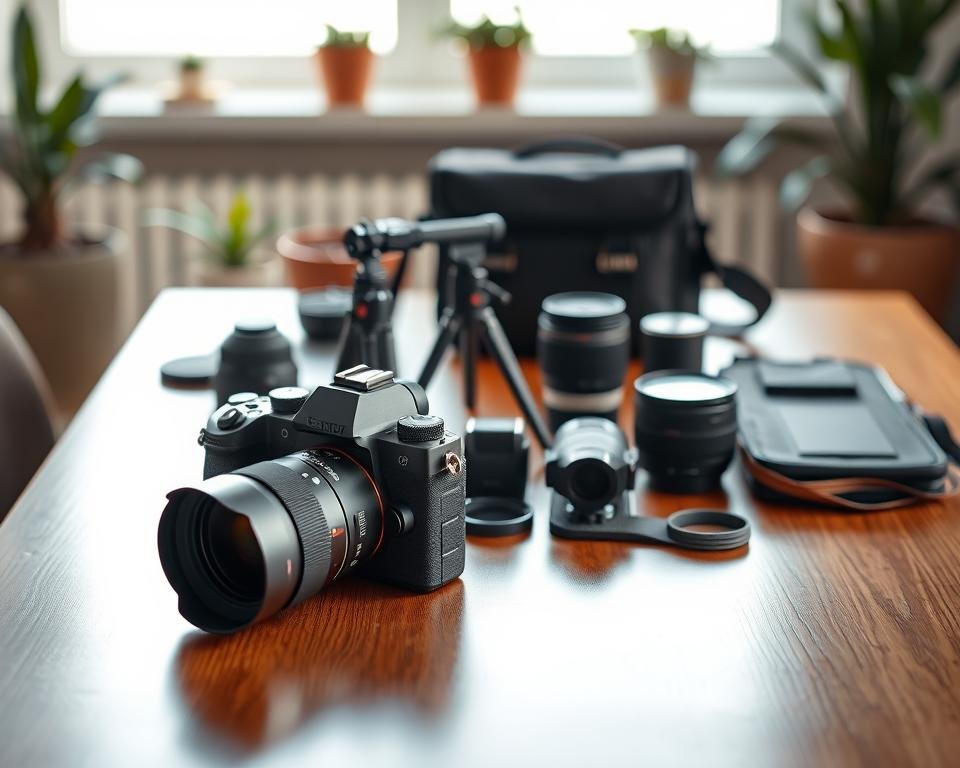
Choosing the right lens is key in minimalist photography. Prime lenses are great because they are simple and produce high-quality images. They help focus on the subject by blurring the background.
Prime lenses make photographers think more about their shots. They limit the focal length, encouraging movement and creativity. This leads to simpler, more focused photos.
Telephoto lenses are another good choice. They compress the scene, cutting down on clutter. This makes for clean, simple shots.
Using Natural Light
Lighting is vital in minimalist photography. Natural light is often the best choice because it’s soft and subtle. The golden hour, just before or after sunset, adds warmth and depth to photos.
Understanding natural light is important. Soft, diffused light reduces harsh shadows and creates even illumination. This is perfect for minimalist shots.
By using the right lens and natural light, photographers can make their minimalist photos more elegant and simple.
Minimalism and Emotion
Minimalist photography is all about showing deep emotions with simple images. By removing extra details, these photographers highlight the essence of their subjects. This creates images that touch viewers’ hearts.
Evoking Feelings through Simplicity
One key way minimalist photography touches us is through negative space photography. This style lets our eyes rest on the subject, bringing calm and peace. For example, a single tree in a big field makes us feel alone and think deeply.
Simplicity isn’t just about getting rid of clutter. It’s about making a visual language that speaks to our feelings. Photographers use simple setups and soft light to make images that look good and feel deep.
Capturing Authentic Moments
Minimalist photography is also about catching real moments. By making the frame simple and focusing on what’s important, photographers show the true nature of a scene. This could be a genuine moment between people or a peaceful landscape that shows nature’s calm.
| Technique | Description | Emotional Impact |
|---|---|---|
| Negative Space | Using empty space around the subject to create a minimalist composition. | Evokes feelings of calmness and serenity. |
| Simple Composition | Simplifying the elements within the frame to focus on the subject. | Creates a sense of clarity and authenticity. |
| Subtle Lighting | Using natural or soft lighting to enhance the mood of the image. | Adds depth and emotional resonance to the photograph. |
Editing Techniques for Minimalist Photography
Editing in minimalist photography is about making the image better without losing its simplicity. I aim to keep the moment true while making small changes to show the intended feeling or message.
Editing for minimalist photos is not about big changes. It’s about small tweaks that bring out the best in the image. This needs a deep understanding of the photo’s core and a careful touch to avoid overdoing it.
Importance of Post-Processing
Post-processing is key in minimalist photography. It lets me fine-tune the image. By tweaking contrast, exposure, and colors, I can make the photo more impactful. Minimalist photography editing is all about being subtle. It’s about making the image look more like what it is, not changing it too much.
One important part of editing in minimalist photography is making the image simpler. This might mean reducing noise, adjusting the tone, or focusing on certain parts of the photo.

Tools I Use for Minimal Editing
I use specific software for editing minimalist photos. I start with Adobe Lightroom for basic tweaks like exposure and color. Then, I use Adobe Photoshop for detailed work.
Choosing the right tools is important in minimalist editing. The software should let you edit without damaging the original image. It should also have tools for making small, precise changes.
With the right tools and techniques, I can make sure my minimalist photos are simple yet powerful. They connect with viewers on a deeper level.
Inspiring Minimalist Photographers to Follow
Exploring minimalist photography has led me to many inspiring photographers. They’ve mastered the art of simplicity.
Their work captures the essence of a scene or subject with just a few elements. Studying their photos, I see many ways to apply minimalism in photography.
Notable Influencers in the Genre
Some photographers really stand out in minimalist photography. Alex Strohl is one, known for his stunning landscapes. His photos often show calm, monochromatic scenes.
Michael Kenna is another inspiration. His photos are simple yet deep. He uses long exposures and black-and-white, making hauntingly beautiful images.
Lessons from Their Work
Learning from these photographers, I see the value of restraint in photography. They remove what’s not needed, focusing on the core. This makes their photos both simple and deep.
Patience and observation are key. Many minimalist photographers wait a long time for the perfect shot. They face tough conditions.
This hard work makes their photos not just beautiful but also touching. As I keep exploring minimalist photography, I’m drawn to the challenge of capturing simple, elegant moments.
Overcoming Challenges in Minimalist Photography
Minimalist photography comes with its own set of hurdles. Yet, it’s these challenges that help us improve our skills. Photographers often face the hard task of simplifying their shots or keeping minimalism alive in their work.
One big challenge is handling composition. Simplifying the scene to highlight the main subject can be tough, mainly when there are lots of distractions around. To get past this, I focus on using negative space effectively. This helps to keep the subject in focus and cuts down on distractions.
Dealing with Composition Issues
Composition is key in minimalist photography. To deal with composition problems, I use a few methods:
- Simplify the background by adjusting the angle or position.
- Use a wide aperture to blur distracting elements.
- Pay attention to lighting, as it can significantly impact the mood and focus of the image.
Staying True to the Aesthetic
Keeping to the minimalist look requires discipline and a clear idea of what makes a minimalist photo. For me, it’s about embracing simplicity and avoiding extra stuff that clutters the picture.
To stick to this style, I remember that sometimes, less is better. I aim to capture moments that are authentic and uncluttered. This lets the viewer connect with the photo on a deeper level.
By being aware of these challenges and finding ways to overcome them, I can keep improving as a minimalist photographer. This way, I can create work that is both meaningful and visually appealing.
Tips for Practicing Minimalism in My Daily Life
Exploring minimalist photography has shown me its value beyond the camera. It has changed my daily life, helping me focus on what’s important.
Simplifying Surroundings
I started by clearing out clutter. This made my space simpler and helped me think better. It also made me see the beauty in simple things, which is key in photography.
Finding Inspiration Everywhere
Now, I see beauty in simple things everywhere. From modern buildings to nature’s patterns. This view has made my photos better and encouraged me to find the essence in every scene.
Living with these principles has brought clarity and purpose to my life. I hope you’ll explore minimalism too. It can make your life richer in many ways.